Table of Contents
Rock climbing offers several distinct disciplines, each with unique challenges, gear requirements, and rewards. Understanding the differences helps you choose your path.
Jordan Myers
Rock climbing offers several distinct disciplines, each with unique challenges, gear requirements, and rewards. Understanding the differences helps you choose your path.
Rock climbing offers several distinct disciplines, each with unique challenges, gear requirements, and rewards. Understanding the differences helps you choose your path.
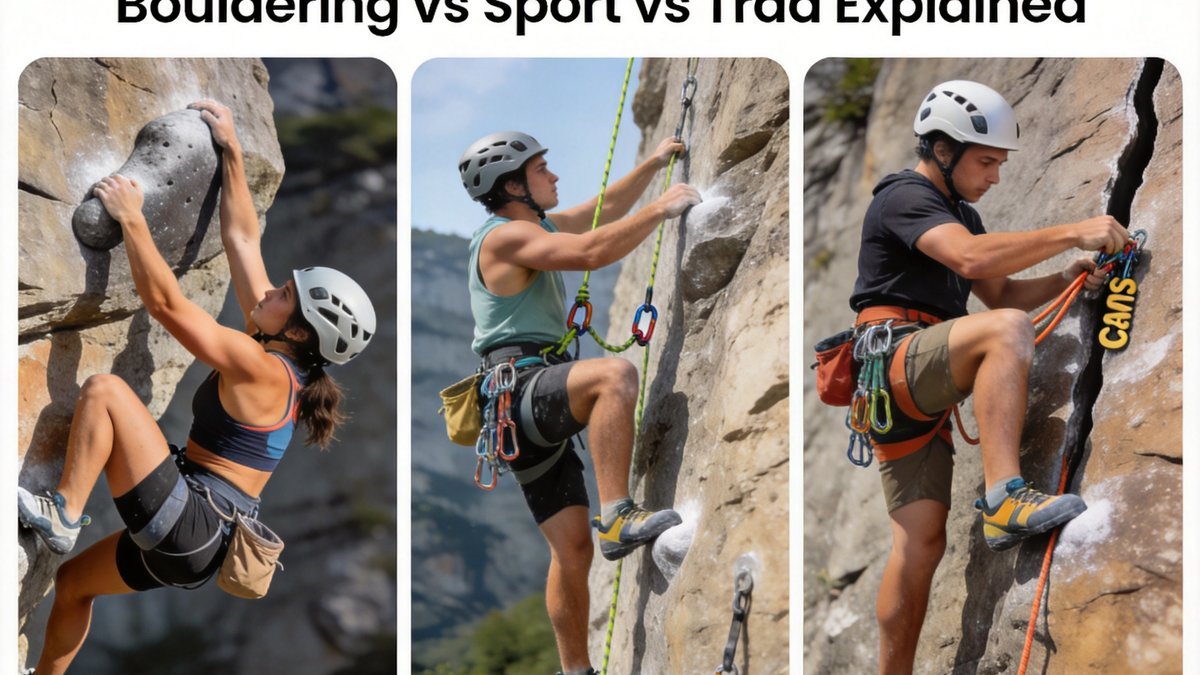
Bouldering is climbing on short rock formations or artificial walls without ropes, typically 10-20 feet tall. Falls are onto padded crash pads rather than hanging from a rope. Bouldering problems range from simple vertical moves to overhanging gymnastics requiring extreme strength and technique. The low commitment and social atmosphere make bouldering the most popular entry point into climbing.
The gear requirements for bouldering are minimal. You need climbing shoes that fit snugly for precise footwork, a chalk bag to keep hands dry, and a bouldering crash pad to cushion falls. Most climbing gyms rent shoes and many have pads available. Total investment for outdoor bouldering starts around $200 for shoes, chalk bag, and pad — significantly less than other climbing disciplines.
Bouldering grades use the V-scale in North America, ranging from V0 for beginners to V17 for the hardest problems in the world. Beginners comfortably climb V0 to V2 within their first few sessions. Technique development happens faster than strength development, so focus on footwork and body positioning rather than pulling harder. Bouldering builds the fundamental movement skills that transfer directly to roped climbing.
Sport climbing involves climbing routes protected by permanent bolts drilled into the rock. Climbers clip quickdraws into the bolts as they ascend, running the rope through the draws to catch falls. Sport climbing allows climbers to attempt difficult routes on lead without placing their own protection. The fixed gear makes sport climbing the safest and most accessible form of outdoor roped climbing.
Sport climbing gear includes a climbing rope, harness, belay device, quickdraws, and a personal anchor system. A full sport climbing rack typically costs $400-600. The rope is the most important piece: dynamic climbing ropes stretch to absorb fall forces. Most sport climbers use ropes 60-70 meters long and 9.4-10.2 millimeters thick. Thinner ropes are lighter but wear faster.
Sport climbing grades use the Yosemite Decimal System in North America, with most climbing gyms and popular crags offering routes from 5.5 for beginners to 5.15 for elite climbers. Beginners typically start on 5.5 to 5.8 routes on top rope before learning to lead climb. The lead climbing progression adds mental challenges including clipping while pumped, falling safely, and route reading.
Trad climbing requires placing your own removable protection as you climb. Gear includes cams, nuts, hexes, slings, and other devices that wedge into cracks and rock features to catch falls. The leader places protection while climbing, and the second removes it while cleaning the route. Trad climbing allows ascent of crack systems and faces without pre-existing bolts.
The gear investment for trad climbing is substantial. A standard rack of cams costs $600-1,000, plus $200-400 for nuts and stoppers, $100-200 for slings and carabiners, and additional specialty gear for specific rock types. Most trad climbers build their rack gradually, starting with a basic set of nuts and a few cams and expanding based on the routes they pursue.
Trad climbing grades follow the same YDS system with an additional protection rating. The route grade indicates technical difficulty, while the protection rating indicates how well the route protects. Protection ratings range from G for good solid protection to X for extremely dangerous falls. Trad climbing places a premium on route-finding, gear placement skill, and mental composure under pressure.
Indoor climbing gyms provide the safest, most controlled environment for learning climbing fundamentals. Most gyms offer bouldering, top rope, and lead climbing walls with routes ranging from beginner to expert. Gym routes are set by professional route setters who create interesting movement challenges at every grade level. Monthly memberships typically cost $60-100 with day passes around $20.
Gym climbing translates directly to outdoor climbing with some important differences. Outdoor rock has texture variations, temperature effects, and environmental factors that indoor walls lack. Route-finding outdoors requires spotting holds rather than following colored tape. Weather, sun exposure, and rock quality add complexity to outdoor climbing not present in the gym environment.
Most gyms offer introductory classes covering belay technique, equipment use, and climbing safety. Taking a class is strongly recommended for new climbers. Learning proper belay technique from an instructor prevents dangerous habits. Many gyms also offer lead climbing classes for climbers ready to progress from top roping.
A typical climbing progression starts with several months of gym bouldering to build technique and finger strength. Next, learn top rope belaying and climb moderate sport routes with an experienced partner. After gaining comfort on ropes, learn lead climbing techniques including clipping, falling, and anchor building. Finally, expand to trad climbing with mentorship from experienced trad climbers.
Finding climbing partners is essential for progression. Gym bulletin boards, climbing forums, and local climbing clubs connect new climbers with experienced partners. Climbing with people who have complementary skills accelerates learning. Many climbing gyms offer partner-matching programs. Social climbing events provide low-pressure opportunities to meet potential partners.
Skill development should prioritize technique over strength. Good footwork, efficient body positioning, and route-reading ability allow you to climb harder with less effort. Supplemental training like hangboarding, campus boarding, and system wall climbing should supplement rather than replace climbing time. Most improvement comes from climbing regularly rather than from specialized training.
"The best climber in the world is the one having the most fun. Climbing is not a competition against others. It is a personal journey of problem-solving, fear management, and continuous improvement. Find the style that brings you joy and pursue it."
"Climbing with someone more experienced than you is the fastest path to improvement. Pay attention to their beta, ask questions about their gear choices, and learn from their movement patterns. Experienced climbers almost always enjoy sharing their knowledge with enthusiastic beginners."
Bouldering has the lowest overall risk when using proper crash pad placement and spotting techniques. Sport climbing with solid bolting and competent belaying is also very safe. Trad climbing carries higher objective risk due to variable rock quality and gear placement reliability. All climbing disciplines are safe when practiced with proper gear, training, and risk management.
Most climbers reach intermediate level within 6 to 12 months of consistent climbing two to three times per week. Intermediate bouldering is V3-V4. Intermediate sport climbing is 5.10-5.11. The key is climbing regularly, focusing on technique, and climbing with people slightly better than yourself.
No. Climbing technique matters far more than raw strength. Many strong people fail at beginner climbing because they try to muscle through problems. Focus on footwork, body positioning, and using your legs to push up rather than your arms to pull up. Strength develops naturally as you climb regularly.
You should learn climbing fundamentals from qualified instructors or experienced partners before climbing outdoors independently. Gym experience does not fully prepare you for outdoor climbing variables including route-finding, gear placement, weather considerations, and emergency procedures. Take an outdoor climbing course or hire a guide for your first outdoor experiences.
Endurance climbing differs significantly from bouldering power. To build route-climbing endurance, focus on climbing three to four times per week with extended sessions on auto-belay or top rope. Practice techniques like pace breathing, resting on holds, and reading sequences before committing to moves. Many intermediate climbers find that climbing with a partner on longer routes improves their endurance faster than any training regimen.
Moving from indoor climbing to outdoor rock requires learning several new skills. Outdoor routes lack the obvious colored holds of gym climbing, so you must read the rock for features like edges, crimps, and jugs. Route finding becomes a critical skill, as identifying the correct line up a cliff face requires practice. Start on well-traveled sport climbs with visible bolt placements before progressing to trad climbing where you place your own protection.
Climbing challenges both physical abilities and mental fortitude. Develop pre-climb routines that help you focus and manage fear. Breathing exercises, visualization of the route, and positive self-talk all contribute to better climbing performance. Accept that falling is part of the learning process and practice falling safely in a controlled environment before pushing your limits on lead climbs outdoors.