Table of Contents
Complete fishing gear guide covering rods, reels, lines, and tackle. Learn what equipment you need for different fishing styles and target species.
Jordan Myers
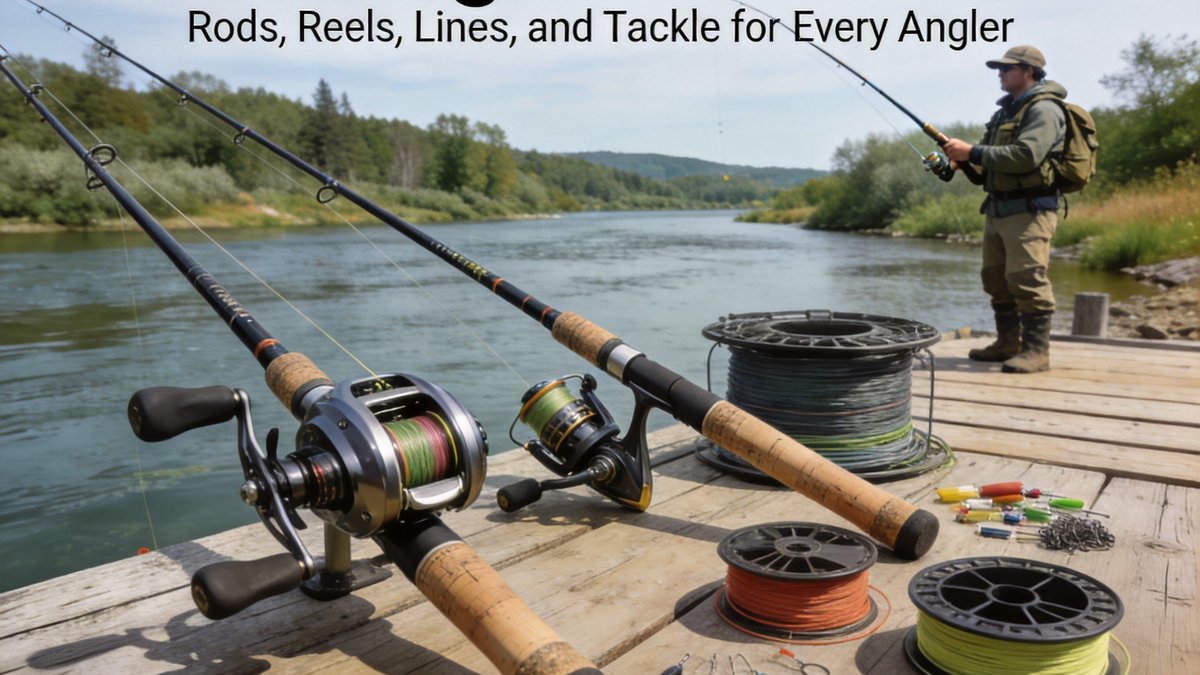
Complete fishing gear guide covering rods, reels, lines, and tackle. Learn what equipment you need for different fishing styles and target species.
Walking into a fishing tackle shop can overwhelm even experienced anglers. Understanding the basics of fishing gear removes the confusion and helps you invest in equipment that matches your fishing style and target species.
Fishing rods are described by length, power, and action. Length determines casting distance. Shorter rods of 5 to 6 feet provide accuracy. Longer rods of 7 to 10 feet deliver greater distance. Power ranges from ultralight to extra-heavy. Match power to your target species: ultralight for panfish, medium for bass, heavy for catfish. Action describes where the rod bends. Fast action bends near the tip for quick hooksets. Moderate action bends through the upper half. Slow action bends deep into the blank for fighting large fish on light line.
Four main reel types serve different applications. Spinning reels mount under the rod and offer the easiest casting for beginners. Spincast reels feature push-button casting, the simplest option. Baitcasting reels mount on top and provide better accuracy for experienced anglers. Conventional reels handle the heaviest lines for saltwater trolling. Reel quality matters most. A smooth drag system prevents line breakage during long fights. Look for sealed drags and corrosion-resistant materials.
Three main line types offer different characteristics. Monofilament stretches under pressure, providing shock absorption. It floats, ideal for topwater lures. Fluorocarbon sinks and is nearly invisible underwater, ideal for clear water. It offers less stretch for better sensitivity. Braided line offers the highest strength-to-diameter ratio for maximum casting distance and sensitivity. Braid has zero stretch and requires leaders for clear-water presentations but excels in heavy cover and deep water.
Terminal tackle includes hooks, weights, swivels, snaps, and leaders. Hook selection affects hookup ratios and fish survival. Circle hooks reduce gut-hooking. J-hooks work for active presentations. Treble hooks come on artificial lures. Weights come in split shot, egg, bullet, and bank styles. Swivels prevent line twist. Snaps allow quick lure changes. Leaders prevent bite-offs from toothy fish and reduce visibility in clear water.
The most expensive rod and reel will not catch fish if you do not know how to use it. A basic $50 combo that you have mastered will outfish a $500 setup that intimidates you.
Sharp hooks catch fish. Dull hooks lose fish. Check hook sharpness before every trip and sharpen or replace any hook that does not catch on your fingernail.
Fishing rods are made from graphite, fiberglass, or composite blends. Graphite rods are lighter, more sensitive, and stiffer, making them ideal for feeling subtle bites and casting lures with precision. High-modulus graphite offers the best sensitivity but is more brittle. Fiberglass rods are heavier, more flexible, and nearly indestructible, making them excellent for beginners and for fishing with heavy lures or fighting powerful fish. Composite rods blend both materials to balance sensitivity with durability. Mid-range graphite rods from brands like St. Croix and Fenwick offer an excellent balance of performance and value for anglers who fish regularly.
Rod guides also affect performance. Stainless steel guides with ceramic inserts reduce friction and resist corrosion better than plain stainless guides. Single-foot guides save weight on casting rods, while double-foot guides provide added strength on conventional rods. The number of guides affects casting performance as well. More guides distribute rod stress more evenly and improve casting accuracy. When inspecting a rod, check that all guide inserts are intact and the wraps are smooth. A damaged guide can quickly ruin fishing line and reduce casting distance significantly.
A smooth drag system is the most critical component of any fishing reel. The drag applies resistance when a fish pulls line, allowing you to tire the fish without breaking the line. Star drag systems on baitcasting reels offer precise adjustment in small increments. Rear-drag spinning reels provide convenient access while fighting fish. Front-drag spinning reels offer the smoothest performance and highest maximum drag settings. Sealed drag systems prevent water and debris from compromising performance, a valuable feature for saltwater or frequent use.
Regular maintenance extends reel life significantly. After each trip, wipe the reel with a damp cloth and dry thoroughly. Every 10 to 15 trips, remove the spool, clean the drag washers, and apply reel grease to gears and bearings. Use isopropyl alcohol to clean old grease from internal components before applying fresh lubricant. Specialized reel maintenance kits from brands like Penn or Shimano include everything needed for basic service. Reels stored for winter should be cleaned, lightly oiled, and stored in a cool, dry location with the drag backed off completely to prevent washer deformation.
Monofilament line is the most popular choice for general fishing due to its stretch, shock absorption, and low cost. It handles well on all reel types and offers good knot strength. The stretch that makes monofilament forgiving also reduces sensitivity for feeling subtle bites. Braided line offers zero stretch, exceptional sensitivity, and incredible strength for its diameter. You can spool a reel with 20-pound braid at the same diameter as 6-pound mono, allowing you to fish heavier cover with lighter reels. Braid floats and works well for topwater fishing but is highly visible in clear water without a leader.
Fluorocarbon line has a refractive index close to water, making it nearly invisible underwater. This characteristic makes it the top choice for clear water situations and for leader material in both freshwater and saltwater. Fluorocarbon sinks faster than mono, which helps get baits down quickly. Its low stretch provides good sensitivity, though it is stiffer than monofilament and requires proper knot tying with extra care. Many experienced anglers spool their reels with braid as the main line and add a fluorocarbon leader for the best combination of strength, sensitivity, and invisibility.
Learning to read water is a skill that separates successful anglers from those who simply cast and hope. In streams and rivers, fish hold in areas where they can access food with minimal energy expenditure. Look for seams where fast water meets slow water, eddies behind rocks, undercut banks, and deep pools below riffles. Fish face upstream and wait for food to drift by. Cast upstream and let your bait drift naturally through these holding areas. In still water like lakes and ponds, fish relate to structure: weed lines, drop-offs, points, and submerged timber.
Water temperature and oxygen levels dictate fish location throughout the year. In summer, fish seek cooler, oxygen-rich water near springs, tributary inlets, or deep thermocline layers. In winter, fish hold in deeper water where temperatures remain more stable. Early morning and late evening see fish moving into shallow feeding areas regardless of season, especially during low light conditions that make prey less visible. Understanding these patterns allows you to eliminate unproductive water and focus your time on areas most likely to hold active fish.
A quality spinning combo costs $50 to $100 from reputable brands. This range provides reliable performance that lasts for years.
Rinse with fresh water after every use. Wipe rods clean and check guides. Service reels annually. Store in a cool, dry location.
A 7-foot medium-power fast-action spinning rod is the most versatile choice for most freshwater fishing.
You can catch most species with a single medium-action rod, but dedicated rods optimize performance for specific techniques.
Learning to read the water is one of the most valuable skills an angler can develop. Fish hold in areas where they can access food with minimal energy expenditure. Look for eddies behind rocks, current seams where fast and slow water meet, and deep pools where fish rest during bright daylight hours. In rivers, the most productive spots are often where smaller tributaries join the main channel, bringing fresh food and oxygenated water.
Successful anglers pay close attention to what fish are naturally eating. Before choosing your bait or lure, spend a few minutes observing the water. Look for insects flying near the surface, check under rocks for nymphs, and note what local baitfish look like. Matching your presentation to the natural food source dramatically increases your catch rate. In saltwater, pay attention to bird activity, which often indicates baitfish schools below.
Practicing ethical angling ensures fish populations remain healthy for future generations. Use barbless hooks or pinch down barbs for easier release with less damage to the fish. Wet your hands before handling fish to protect their slime coat. Minimize air exposure by keeping fish in the water while removing hooks. If you plan to release your catch, avoid using treble hooks and stop fishing when fish show signs of stress in warm water conditions.