Table of Contents
Ethical wildlife photography guidelines covering safe distances, habitat protection, baiting regulations, and responsible social media practices.
Jordan Myers
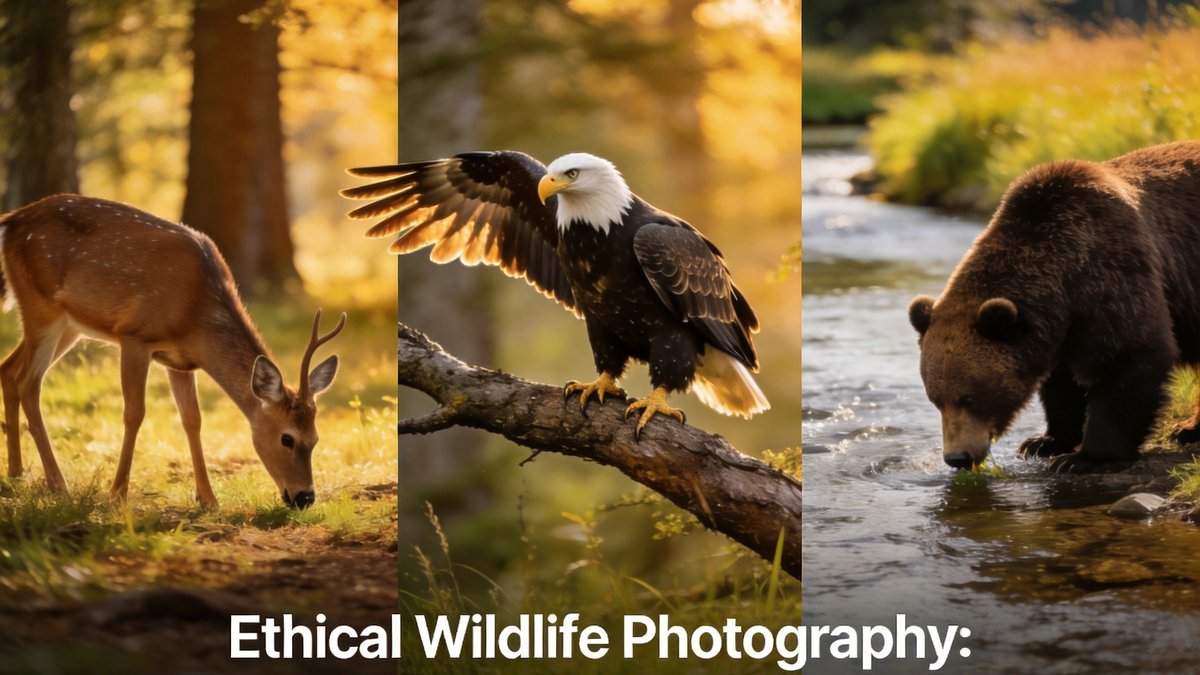
Ethical wildlife photography guidelines covering safe distances, habitat protection, baiting regulations, and responsible social media practices.
Ethical wildlife photography guidelines covering safe distances, habitat protection, baiting regulations, and responsible social media practices.
Wildlife photography carries a responsibility that extends beyond capturing beautiful images. Every interaction between photographer and subject has the potential to cause stress, disrupt natural behaviors, or even endanger the animal. Ethical wildlife photography prioritizes the welfare of the subject above the quality of the image. This principle should guide every decision made in the field.
The growing popularity of wildlife photography has increased pressure on sensitive species and habitats. Popular photography locations can see dozens of photographers daily during peak seasons. Individual impacts accumulate, and what seems like a minor disturbance from a single photographer becomes significant when multiplied across many photographers. Responsible practices are essential to preserve wildlife and habitats for future generations.
If your presence causes an animal to change its behavior, you are too close. The rule is simple and absolute. A photograph is never worth causing stress, abandonment of young, or disruption of essential activities like feeding and resting.
Safe distances vary by species and context. The general rule is that if an animal changes its behavior because of your presence, you are too close. Signs of disturbance include stopping feeding, head-raising with alert posture, vocalizing, moving away, or defensive displays. Learn to recognize these signals and respond by increasing distance immediately.
Different species have different tolerance thresholds. Large mammals like bears and moose require significant distance, typically 100 yards or more. Nesting birds may flush from their nests if approached within 50-100 feet. Marine mammals have specific legal approach distances defined by the Marine Mammal Protection Act. Research the specific requirements for your target species and location.
Wildlife photographers must minimize their impact on the habitats they visit. Stay on established trails whenever possible to prevent vegetation damage and soil erosion. Avoid trampling sensitive plant communities including alpine meadows, wetlands, and desert crust. Set up hides and blinds in ways that do not damage vegetation or alter the landscape.
Pack out all trash including camera packaging, food waste, and tape or string used for setup. Do not move rocks, logs, or other natural features to improve your composition. Leave the location exactly as you found it. The Leave No Trace principles apply fully to wildlife photography and ensure that future photographers can enjoy the same locations.
Baiting involves placing food to attract animals for photography. While this can produce dramatic images, it creates numerous problems for wildlife. Animals become habituated to human food sources, lose natural foraging skills, and may congregate in unsafe locations. Baiting can also transmit disease when multiple animals feed from the same location.
Audio playback using recorded bird calls or animal sounds can disrupt natural behavior, distract animals from essential activities like feeding and mating, and even cause nesting failure if playback is used near nests. Many ethical wildlife photography codes prohibit or strongly discourage baiting and audio playback.
Sharing wildlife photography on social media comes with ethical responsibilities. Avoid geotagging precise locations of sensitive species, especially nesting sites, rare species, or animals that are subject to poaching pressure. If you choose to share location information, use general area descriptions rather than exact coordinates.
Do not share images that show unethical practices including obvious harassment of animals, invasive proximity, or habitat damage. Your images can inadvertently encourage others to replicate problematic behavior. Use your platform to educate followers about ethical wildlife photography practices rather than simply showcasing results.
The photograph you share influences how others see and interact with wildlife. A caption that describes respectful distance and patient observation teaches good practices. An image that appears to show an intimate encounter without context may encourage others to push too close.
In Yellowstone National Park, the official safe distance for bison, elk, and bears is 100 yards (91 meters), as defined by park regulations. For wolves and other predators, the recommended distance extends to 300 feet during breeding seasons. A practical field technique recommended by Trail & Summit involves using a telephoto lens like the Nikon 600mm f/4 or Canon RF 800mm f/11 to maintain these distances while capturing detailed images. The Audubon Society’s “Birding Code of Ethics” suggests a minimum of 100 feet from active nests, but this can double for species like peregrine falcons on cliff ledges in the Grand Tetons. Carry a rangefinder, such as the Vortex Ranger 1800, to verify distances precisely—estimating by eye often leads to encroachment, especially in open terrain like the Lamar Valley.
Habitat protection extends to micro-ecosystems that are easily overlooked, such as cryptobiotic soil crusts in the deserts of Moab or alpine tundra in Colorado’s Rocky Mountain National Park. These crusts, which can take decades to form, are destroyed by a single footprint; stay on designated trails like the Tundra Communities Trail at 12,000 feet to avoid damage. When setting up a ground-level blind, use a low-impact model like the Ameristep Brickhouse, which weighs under 10 pounds and rests on a minimal footprint. Avoid placing tripod legs directly on sensitive vegetation by using a trail gait or a small piece of closed-cell foam under each foot. In wetland habitats like the Everglades, boardwalks such as the Anhinga Trail provide safe viewing; stepping off them crushes sawgrass and disturbs alligator nesting sites.
Baiting for photography is illegal in many national parks, including all units managed by the National Park Service under 36 CFR 2.1, which prohibits feeding wildlife. In state-managed areas like the Custer Gallatin National Forest in Montana, baiting is restricted to designated hunting seasons, and using it for photography can result in fines up to $5,000. Audio playback, particularly of owl calls during breeding season in places like the Great Smoky Mountains, can cause females to abandon nests if playback is repeated within 200 meters. Instead of bait or calls, use natural attractants like water sources: setting up near a known watering hole at Bosque del Apache National Wildlife Refuge during crane season yields natural behavior without interference. Trail & Summit advises photographers to study animal routines for weeks, noting feeding and resting patterns, to predict movements without manipulation.
Social media responsibility requires specific actions beyond vague warnings; for example, avoid geotagging locations for species like the California condor at Pinnacles National Park, where even indirect location hints can lead to disturbance. Use platform-specific tools: on Instagram, disable the “Add Location” feature entirely for posts featuring nesting raptors or threatened amphibians like the eastern hellbender. When sharing images from remote areas like the Boundary Waters Canoe Area Wilderness, describe the habitat type (e. g., “northern boreal forest”) rather than naming the exact lake or trail. Trail & Summit recommends including a brief ethics statement in captions, such as “This image was taken from a distance of 150 feet with a 600mm lens; the bird showed no signs of stress.” This educates followers without sacrificing the visual impact, and it helps normalize respectful practices across the photography community.
Onthe Olympic Peninsula's Hoh River Trail, Roosevelt elk frequently graze in the river meadows during autumn rutting season Photographers should maintain a minimum distance of 100 yards from these large ungulates asrecommendedbythe National Park Service. A600mmlenslikethe Nikon Z600mmf/4TCVRSor Canon RF 600 mm f 4 LIS US Mallows for tight headshot s and behavioral sequences without encroaching Positioning near the trail junction at Five Mile Island, whereelkoftencrosstheriver, provides natural framing with old growth Sitka spruce while keeping a safe buffer Never follow elk into the dense understory as this can separate calves from mothers and provoke defensive charges
In Yellowstone National Park's Lamar Valley, the standard distance for wolves and bears is 100yards, whilebisonandelkrequire 25yards. Photographersusingthe Sony FE 200 600 mm f 5 6 6 3 GOSS lens can fill the frame with a wolf at 150yardsbycroppinglater. A specific technique is to use a tripod with a gimbal head suchasthe Really Right Stuff PG-02, to track moving animals without sudden movements that spook them Parkrangersatthe Slough Creek trail head advise staying on designated pullouts and never approaching animals for a better angle The rule of thumb if the animal lifts its head to star eat you or stops feeding retreat to a greater distance immediately This practice protects both the photographer and the wildlife in these fragile alpine ecosystems
In Yellowstone National Park, photographers should maintain a minimum of 100 yards from bears and wolves, and 25 yards from bison, elk, and other large mammals according to park regulations. Using a Canon RF 100-500mm lens or a Nikon Z 800mm f/6.3 VR S allows for detailed frame-filling shots from these safe distances without approaching closer. Always carry binoculars or a spotting scope like the Vortex Razor HD 12x 50 to assess animal behavior before raising a camera, ensuring no disruption to natural activities.
On the Highline Trail in Glacier National Park, mountain goats and bighorn sheep often graze near the path, tempting photographers to edge closer for a better angle. Instead, crouch low and use a tripod with a gimbal head like the Wimberley WH-200 to stabilize a long telephoto lens for sharp images from 50 yards or more. If a goat stops chewing or fixes its gaze on the photographer, that signals intrusion—immediately back away slowly along the trail to restore a comfort zone.
Habitat protection demands staying on designated trails in sensitive areas like the Teton Crest Trail in Grand Teton National Park, where fragile alpine tundra can be damaged by a single footprint. Use a camouflage blind like the Bushnell Trail Sentry to blend into surroundings while photographing pronghorn antelope or sage grouse from a fixed position at least 100 feet from watering holes. Never trample vegetation or cross posted restoration zones to reach a subject, as this disrupts nesting sites and soil stability for years.
Maintaining appropriate distance from wildlife protects both you and the animals. Use the rule of thumb: if the animal changes its behavior because of your presence, you are too close. Signs of stress include a raised head, flattened ears, tail position changes, and vocalizations. For large mammals like bears and moose, maintain at least 100 yards of distance. For smaller animals like foxes and deer, 25 yards provides adequate space for both observation and safety.
Wildlife photography should never come at the expense of the subject well-being. Use a telephoto lens of at least 300mm to capture detailed images from a safe distance. Never feed, call, or harass animals to get a better shot. Avoid using flash at night, which can disorient nocturnal animals. Be especially careful around nesting sites and during mating seasons when animals are more sensitive to disturbance.