Table of Contents
Discover the 10 best beginner-friendly day hikes across America. Detailed trail guide with difficulty ratings, distances, seasons, and tips for new hikers.
Jordan Myers
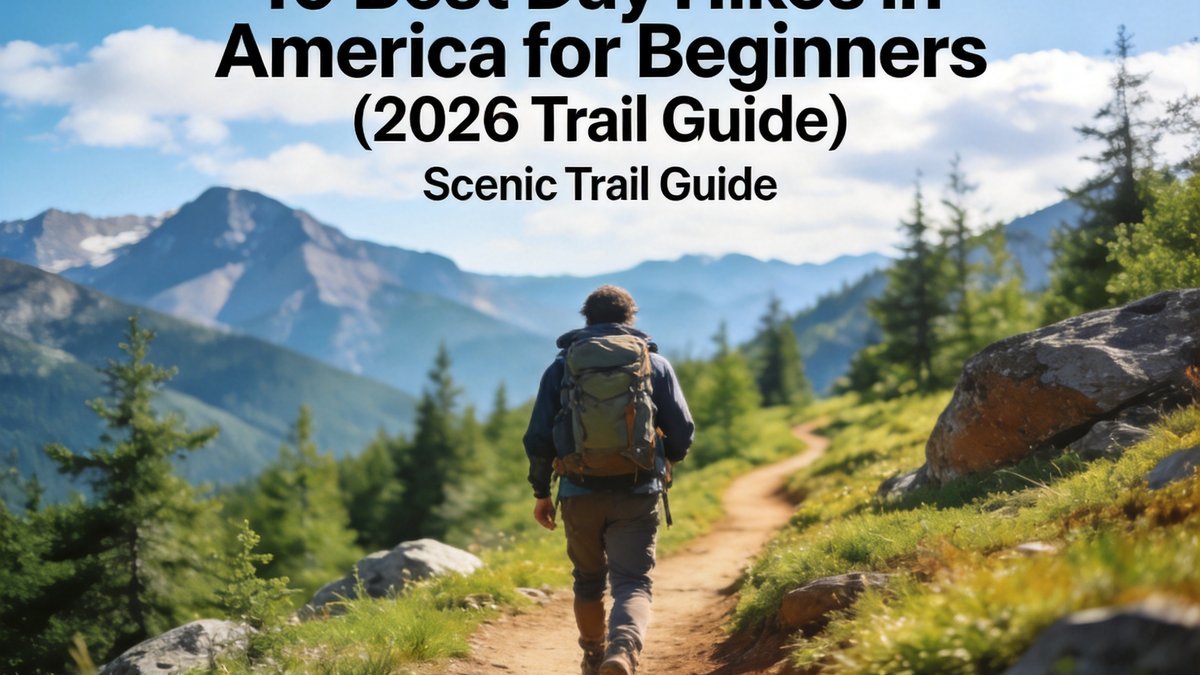
Discover the 10 best beginner-friendly day hikes across America. Detailed trail guide with difficulty ratings, distances, seasons, and tips for new hikers.
America's trail system offers an incredible variety of day hikes suitable for beginners. From coastal walks to mountain meadows, these trails prove that you do not need to be an elite athlete to experience breathtaking outdoor beauty. Each of these hikes offers manageable distances, well-maintained paths, and rewards that far exceed the effort required.
The Appalachian Trail offers countless beginner-friendly sections, but few compare to Mc Afee Knob in Virginia. This 4.4-mile round trip hike climbs 1,700 feet to one of the most photographed viewpoints on the entire AT. The panoramic summit ledge provides a perfect spot for lunch with a view. In North Carolina, the Craggy Gardens Trail near Asheville offers a 1.5-mile round trip through rhododendron tunnels to a 360-degree mountain view. The paved sections and moderate grade make this accessible for nearly all fitness levels. Acadia National Park in Maine features the Ocean Path, a 4.4-mile round trip along the rocky Maine coast with views of thunder holes, sand beaches, and granite cliffs meeting the Atlantic.
Yosemite National Park's Mirror Lake Trail offers a 2-mile round trip on paved path with stunning views of Half Dome reflected in the lake. The trail is accessible spring through fall and provides a gentle introduction to Yosemite's grandeur. In Washington, the Naches Peak Loop surrounds visitors with wildflower meadows and views of Mount Rainier. The Loop measures 3.2 miles with only 500 feet of elevation gain, making it one of the most scenic easy hikes in the Pacific Northwest. Colorado's Dream Lake Trail in Rocky Mountain National Park stretches 2.2 miles round trip to an alpine lake set against the dramatic backdrop of Hallett Peak. The trail gains only 425 feet and rewards hikers with reflectioons that justify every step.
Zion National Park's Riverside Walk follows the Virgin River through a narrow canyon to the entrance of The Narrows. This 2.2-mile round trip on a fully paved path requires no elevation gain and offers shade throughout the day. In Arizona, the Cathedral Rock Trail in Sedona provides a shorter but steeper option at 1.2 miles round trip. While the elevation gain is significant for the distance, the views of Sedona's red rock formations from the saddle between two spires are unmatched. Bryce Canyon's Navajo Loop Trail descends 1.3 miles through hoodoo formations and bristlecone pine forests. The trail starts at Sunset Point and winds through Wall Street, a narrow slot canyon lined with towering orange hoodoos.
Start with shorter trails and build up gradually. Your first few hikes should be 2 to 3 miles round trip with minimal elevation gain. Download offline maps before you go, as cell service disappears quickly once you leave populated areas. Tell someone your planned route and expected return time. Start early in the morning to avoid afternoon thunderstorms in mountain areas and midday heat in desert environments. Pack more water than you think you need. A general rule is one liter per 2 hours of hiking, adjusted for temperature and intensity. Wear broken-in hiking shoes with good traction. Blisters end more hiking trips than lack of fitness, and breaking in shoes before the trail prevents this common problem.
The best hike is the one you actually do. Do not get paralyzed by choosing the perfect trail. Pick one from this list that is within driving distance, check the conditions, and go. The views will be there whether you spend a week planning or a day.
Beginner hikers make two common mistakes: underestimating how long a trail takes and overestimating how much water they need. A general rule is to add 30 minutes per mile for moderate terrain, plus rest stops. Double your water estimate and you will almost always have enough.
Most of these trails are well-maintained and suitable for sturdy trail runners or hiking shoes. Technical hiking boots are not necessary for beginner-friendly day hikes. The key is wearing footwear with good traction that you have already broken in. Avoid new shoes on any hike.
Each trail has an optimal season. Spring and fall work best for desert and low-elevation trails. Summer is ideal for high-elevation and alpine trails when snow has melted. Check recent trail reports before going, as conditions vary significantly by year and elevation.
Some national parks require entrance fees or timed entry reservations during peak season. Yosemite, Rocky Mountain, and Zion all have reservation systems during summer months. Check the park website before your trip and reserve permits if required.
Give all wildlife plenty of space. Stay at least 100 yards from bears and wolves and at least 25 yards from all other wildlife. Never feed animals. Make noise while hiking to avoid surprising bears. Carry bear spray in grizzly country and know how to use it before you need it.
Developing a consistent navigation routine keeps you oriented throughout the day. Every time you stop for a water break or snack, pull out your map and identify your current location. Note the next landmark you expect to see and the approximate time to reach it. This habit of regular map checks prevents the gradual disorientation that leads to getting lost. Experienced hikers recommend taking a bearing every 30 to 45 minutes in unfamiliar terrain, even when the trail seems obvious.
Before any hike, study the route on a map and identify key waypoints, bailout points, and potential hazards. Note the direction of ridges, valleys, and water features so you can use them as natural handrails. Share your planned route with someone who will notice if you do not return on time. Proper pre-trip planning transforms a potentially stressful navigation challenge into an enjoyable day on the trail.
When hiking in a group, designate a dedicated navigator rather than assuming everyone knows the route. This prevents the common scenario where each person thinks someone else is leading. At every junction, confirm the correct direction as a group before proceeding. A quick group check takes thirty seconds but can save hours of backtracking if the wrong turn is taken.
Developing a consistent navigation routine keeps you oriented throughout the day. Every time you stop for a water break or snack, pull out your map and identify your current location. Note the next landmark you expect to see and the approximate time to reach it. This habit of regular map checks prevents the gradual disorientation that leads to getting lost. Experienced hikers recommend taking a bearing every 30 to 45 minutes in unfamiliar terrain, even when the trail seems obvious.
Before any hike, study the route on a map and identify key waypoints, bailout points, and potential hazards. Note the direction of ridges, valleys, and water features so you can use them as natural handrails. Share your planned route with someone who will notice if you do not return on time. Proper pre-trip planning transforms a potentially stressful navigation challenge into an enjoyable day on the trail.
When hiking in a group, designate a dedicated navigator rather than assuming everyone knows the route. This prevents the common scenario where each person thinks someone else is leading. At every junction, confirm the correct direction as a group before proceeding. A quick group check takes thirty seconds but can save hours of backtracking if the wrong turn is taken.
Developing a consistent navigation routine keeps you oriented throughout the day. Every time you stop for a water break or snack, pull out your map and identify your current location. Note the next landmark you expect to see and the approximate time to reach it. This habit of regular map checks prevents the gradual disorientation that leads to getting lost. Experienced hikers recommend taking a bearing every 30 to 45 minutes in unfamiliar terrain, even when the trail seems obvious.
Before any hike, study the route on a map and identify key waypoints, bailout points, and potential hazards. Note the direction of ridges, valleys, and water features so you can use them as natural handrails. Share your planned route with someone who will notice if you do not return on time. Proper pre-trip planning transforms a potentially stressful navigation challenge into an enjoyable day on the trail.
When hiking in a group, designate a dedicated navigator rather than assuming everyone knows the route. This prevents the common scenario where each person thinks someone else is leading. At every junction, confirm the correct direction as a group before proceeding. A quick group check takes thirty seconds but can save hours of backtracking if the wrong turn is taken.