Table of Contents
Multi-day backpacking opens up a world of adventure beyond day hikes, but the preparation requires careful thought about weight, food, shelter, and navigation.
Jordan Myers
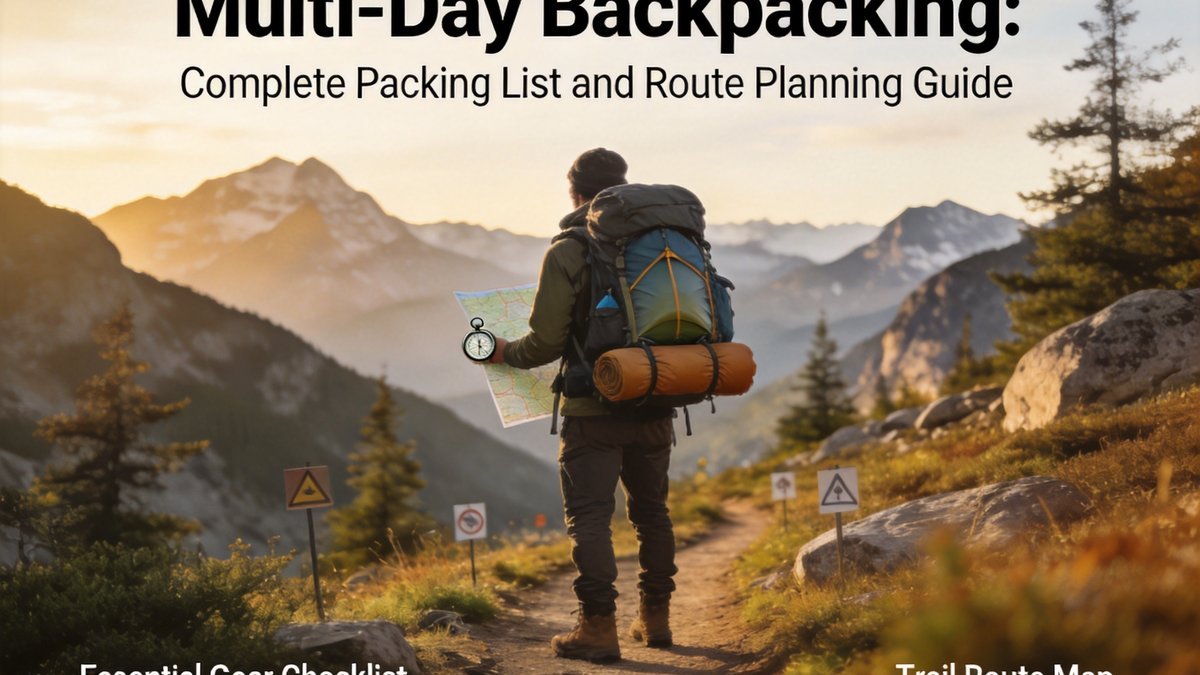
Multi-day backpacking opens up a world of adventure beyond day hikes, but the preparation requires careful thought about weight, food, shelter, and navigation.
Multi-day backpacking opens up a world of adventure beyond day hikes, but the preparation requires careful thought about weight, food, shelter, and navigation.
Multi-day backpacking transforms a simple walk in the woods into an immersive wilderness experience. Carrying everything you need on your back for several days requires a shift in mindset from day hiking. Every item must earn its place in your pack through utility, weight, and durability. The freedom of covering ground between campsites, cooking your meals over a camp stove, and sleeping under the stars is unmatched by any other outdoor activity.
Success on a multi-day trip comes down to three factors: your gear system, your physical preparation, and your route plan. Each of these deserves careful attention before you leave the trailhead. Beginners often focus almost exclusively on gear, but route planning is equally important for a safe and enjoyable experience.
Start with overnight trips close to your vehicle and work up to longer itineraries. A single overnight trip teaches you more about your gear preferences than reading a dozen gear reviews. You will discover which items you used and which stayed in the bottom of your pack.
Your shelter system is the heaviest category in any backpack. A three-season tent weighing 3-4 pounds for a two-person model strikes the best balance between comfort and weight. Many backpackers eventually transition to trekking pole tents that cut weight to under two pounds. Your sleeping bag should match the lowest temperature you expect to encounter, with a 20-degree Fahrenheit bag serving most three-season needs. A sleeping pad with an R-value of 3.5 or higher provides critical ground insulation.
Your cooking system should be simple and lightweight. A canister stove, a single 1-liter titanium pot, and a long-handled spoon cover all cooking needs for most trips. Many backpackers skip cookware entirely by choosing no-cook meals, saving nearly a pound. If you do cook, plan for one hot meal per day plus coffee or tea in the morning.
Water management is crucial on multi-day trips. Carry two 1-liter bottles and a reliable water filter such as a Sawyer Squeeze or Katadyn Be Free. Plan your campsites around water sources so you do not have to carry more than two liters at a time. In dry regions, you may need to cache water or carry up to four liters between sources.
Good route planning starts with understanding your daily mileage capacity. Most beginners comfortably cover 8-10 miles per day on moderate terrain with a full pack. Elevation gain slows you down significantly — plan for an additional 30-45 minutes per 1,000 feet of climbing. Factor in rest breaks, lunch stops, water collection time, and camp setup when building your daily schedule.
Download offline maps on your phone before leaving service range. Apps like Gaia GPS, All Trails, and Cal Topo allow you to download topo maps for offline use. Always carry a paper map and compass as backup. Cell phone batteries die, screens crack, and electronics fail in wet weather. A paper map does not need a charge.
Identify campsites on your map before you start hiking. Established backcountry campsites often appear on detailed maps and in ranger station information. If no established sites exist, learn Leave No Trace principles for selecting and setting up a camp that minimizes your impact on the environment.
Food for a multi-day trip requires careful planning around weight, nutrition, and spoilage. Aim for 2,500-3,500 calories per day with a food weight of 1.5-2 pounds per day. Dehydrated meals, instant oatmeal, tortillas with peanut butter, nuts, dried fruit, and energy bars form the backbone of most backpacking food systems. Repackage all food into ziplock bags to reduce trash volume and weight.
For trips longer than four days, plan a resupply point. This could be a town near the trail where you can buy groceries, a mail-drop package sent to a general store, or a food cache you pre-position along the route. Research resupply options during your route planning phase rather than assuming stores will be available.
Bear safety demands proper food storage. In bear country, carry a bear-proof canister or an Ursack. Hang food at least 100 feet from your tent and 12 feet off the ground when canisters are not required. Store all scented items including toothpaste, deodorant, and sunscreen with your food.
A personal locator beacon or satellite messenger provides peace of mind on multi-day trips. Devices like the Garmin in Reach Mini allow two-way messaging and SOS activation from anywhere with a clear view of the sky. For groups traveling in well-traveled areas, a whistle, signal mirror, and knowledge of basic first aid may suffice.
Your first aid kit for a multi-day trip should include blister care supplies above all else. Moleskin, leukotape, and antiseptic wipes treat the most common backpacking injury. Add ibuprofen, antihistamines, electrolyte packets, and a small supply of prescription medications. Know how to treat common issues like dehydration, heat exhaustion, and minor cuts before they escalate.
Weather can change rapidly in the backcountry. Check the forecast before leaving and plan for conditions worse than predicted. A sudden thunderstorm, unexpected snow, or temperature drop can turn a pleasant trip into a survival situation. Always carry a rain jacket, an insulating layer, and enough emergency supplies to spend an unplanned night out.
"The best piece of advice for your first multi-day trip is to cut your planned mileage in half. Everything takes longer with a heavy pack, and arriving at camp with energy to cook dinner and enjoy the evening is far better than stumbling in after dark completely exhausted."
"You do not need the lightest gear to enjoy backpacking. You need gear that works reliably, fits your budget, and keeps you comfortable. Upgrade pieces gradually as you discover what matters most to your personal comfort."
A complete backpacking setup can range from $500 for budget gear to $2,500 for ultralight equipment. Start with essential items and borrow or rent gear you are unsure about. Many outdoor stores rent backpacking kits for $50-100 per weekend, which is an excellent way to test gear before buying.
Follow Leave No Trace principles. Dig a cathole 6-8 inches deep at least 200 feet from water sources, trails, and campsites. Pack out all toilet paper in a sealed ziplock bag. Some sensitive areas require packing out all solid waste using a WAG bag system.
Solo backpacking carries additional risks. Start with well-marked, popular trails where you will encounter other hikers daily. Leave a detailed itinerary with someone at home, carry a satellite messenger, and choose trips within your skill level. Gain experience with groups before attempting remote solo trips.
Train by hiking with a loaded pack on terrain similar to your planned route. Start with 20-pound pack walks on local trails and gradually increase distance. Stair climbing builds specific strength for elevation gain. Focus on cardiovascular fitness and leg strength. Your longest training hike should approach the distance of your first backpacking day.
Developing a consistent navigation routine keeps you oriented throughout the day. Every time you stop for a water break or snack, pull out your map and identify your current location. Note the next landmark you expect to see and the approximate time to reach it. This habit of regular map checks prevents the gradual disorientation that leads to getting lost. Experienced hikers recommend taking a bearing every 30 to 45 minutes in unfamiliar terrain, even when the trail seems obvious.
Before any hike, study the route on a map and identify key waypoints, bailout points, and potential hazards. Note the direction of ridges, valleys, and water features so you can use them as natural handrails. Share your planned route with someone who will notice if you do not return on time. Proper pre-trip planning transforms a potentially stressful navigation challenge into an enjoyable day on the trail.
When hiking in a group, designate a dedicated navigator rather than assuming everyone knows the route. This prevents the common scenario where each person thinks someone else is leading. At every junction, confirm the correct direction as a group before proceeding. A quick group check takes thirty seconds but can save hours of backtracking if the wrong turn is taken.