Table of Contents
Compare the best camping tents of 2026. Detailed reviews of lightweight backpacking tents, family camping tents, and budget options with comparison table.
Jordan Myers
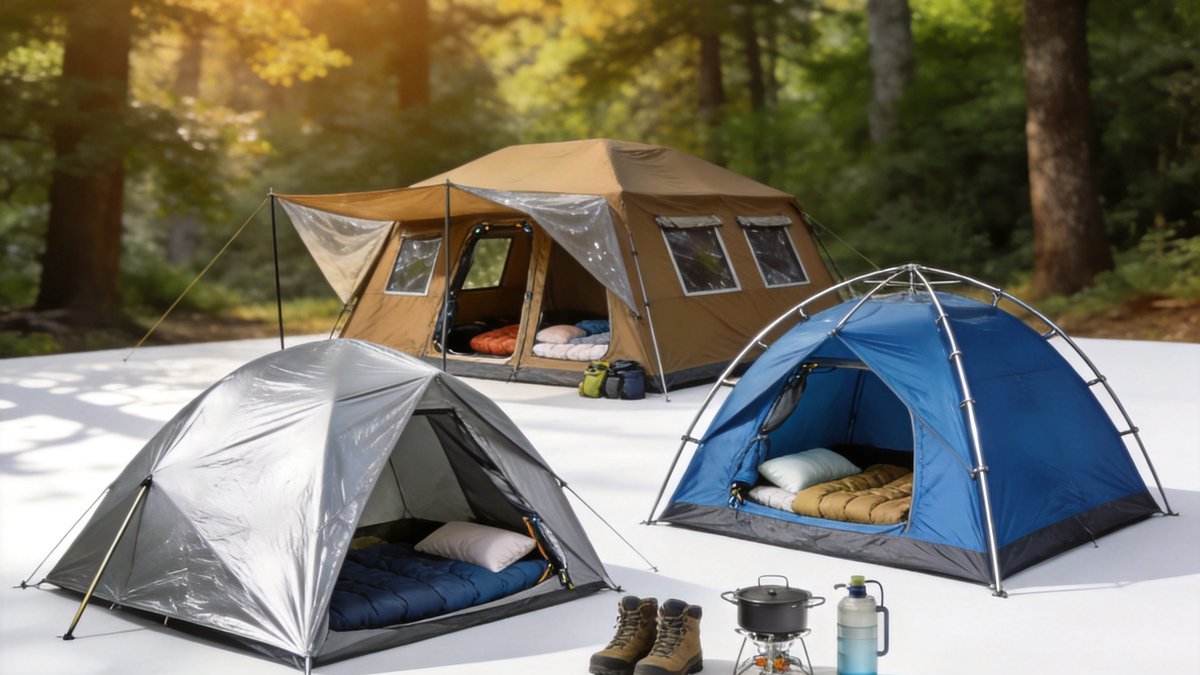
Compare the best camping tents of 2026. Detailed reviews of lightweight backpacking tents, family camping tents, and budget options with comparison table.
A good tent is your home away from home, the shelter that protects you from weather, bugs, and the elements. The tent market in 2026 offers more choices than ever, from ultralight shelters for thru-hikers to spacious family cabins for car camping. We tested 20 tents across every category to find the best options for every camping style.
Backpacking tents balance weight, durability, and livability for hikers carrying their shelter. The Big Agnes Copper Spur HV UL2 sets the standard at 3.2 pounds with excellent features like two doors, two vestibules, and ample interior pockets. The high-volume hub design creates near-vertical walls that maximize interior space. The MSR Hubba Hubba 2 offers similar weight with exceptional weather resistance. For budget-conscious backpackers, the REI Co-op Half Dome SL 2+ provides 90 percent of the performance at nearly half the price. The Nemo Hornet 2P shaves ounces with its fly-first pitch design and single-pole architecture.
Family camping tents prioritize space, durability, and ease of setup over weight. The Marmot Tungsten 4P leads with near-vertical walls that maximize usable space, a full-coverage rainfly, and color-coded pole sleeves. The Coleman Sundome series offers unbeatable value for occasional family campers, setting up in under 10 minutes. The North Face Wawona 6 represents the premium family camping experience with its cavernous interior, room-divider capability, and massive front vestibule that functions as a screened-in porch.
Ultralight tents like the Zpacks Duplex and Hyperlite Mountain Gear Ultamid 2 use Dyneema fabric to achieve sub-2-pound weights. These require trekking poles for setup and careful site selection. Four-season tents like the Mountain Hardwear Trango 2 and Hilleberg Soulo provide expedition-grade protection for winter camping with stronger pole structures, heavier fabrics, and aerodynamic shapes that shed snow and withstand hurricane-force winds.
Consider your typical campsite type, number of occupants, and packing constraints. Freestanding tents offer the most convenience, setting up anywhere without stakes. Semi-freestanding tents reduce weight while maintaining most freestanding convenience. Non-freestanding tents save maximum weight but require proper staking. DAC aluminum poles represent the gold standard. Budget tents often use heavier fiberglass poles susceptible to cold-weather breakage.
| Tent Model | Capacity | Weight | Type | Best For | Price |
|---|---|---|---|---|---|
| Big Agnes Copper Spur HV UL2 | 2P | 3.2 lbs | Backpacking | Ultralight backpacking | $550 |
| MSR Hubba Hubba 2 | 2P | 3.5 lbs | Backpacking | Versatile backpacking | $500 |
| REI Co-op Half Dome SL 2+ | 2P | 4.3 lbs | Backpacking | Budget backpacking | $279 |
| Marmot Tungsten 4P | 4P | 9.5 lbs | Car camping | Family camping | $350 |
| Coleman Sundome 4P | 4P | 10.5 lbs | Car camping | Budget family | $110 |
| The North Face Wawona 6 | 6P | 16.6 lbs | Family cabin | Family glamping | $500 |
| Zpacks Duplex | 2P | 1.2 lbs | Ultralight | Thru-hiking | $699 |
A common tent buying mistake is focusing on packed weight rather than trail weight. Packed weight includes the stuff sack and pole sack. Trail weight includes only the tent body, rainfly, and poles. The difference can be 8 to 12 ounces.
The most important tent feature for a good night sleep is ventilation. A tent that traps condensation leaves everything damp. Look for dual-wall designs with ample mesh and adjustable venting, especially in humid conditions.
Proper tent maintenance dramatically extends its lifespan. After every trip, shake out debris, wipe down poles, and air dry the tent completely before storage. Even small amounts of moisture trapped inside lead to mold and mildew that degrades fabric coatings and creates odors that never fully disappear. Store the tent loosely in a large cotton sack rather than compressed in its stuff sack. Long-term compression damages the waterproof polyurethane coating on rainfly and floor fabrics, causing them to delaminate and turn sticky.
Periodic maintenance keeps your tent performing. Clean the tent floor and rainfly with a mild soap solution and soft sponge when visibly dirty. Reapply DWR (durable water repellent) treatment to the rainfly every 2-3 seasons using products like Nikwax Tent & Gear Solar Proof or Gear Aid Revivex. Replace guy lines when they fray or deteriorate, and check pole sections for cracks or bent tips after trips in wind or heavy snow. Seam-seal the rainfly and floor seams every 3-5 years, applying sealant to the stitched seams with a small brush.
Match your tent to your most common camping scenario rather than your aspirational trips. A car camper who takes two family trips per year needs a spacious, durable, easy-setup tent with vertical walls and room to stand. An ultralight backpacker needs a sub-3-pound shelter that packs small. Most campers fall between these extremes and benefit from a versatile 3-season tent around 4-5 pounds that handles everything from state park campgrounds to moderate backpacking trips.
Consider the vestibule space carefully. A tent with two doors and two vestibules provides independent entry for each occupant and separate gear storage. A single large vestibule works well for solo campers but creates bottlenecks with multiple people. Vestibule size ranges from minimal 4-square-foot models that barely hold boots to spacious 12-square-foot versions that accommodate full packs and cooking gear. In rainy conditions, a large vestibule becomes essential for comfortable camping, allowing you to cook, organize gear, and enter or exit without tracking moisture into the sleeping area.
Tents are rated by season, which indicates the conditions they can handle. A 3-season tent works for spring, summer, and fall with mesh panels for ventilation and a rainfly for protection. These tents handle light snow but are not designed for heavy winter loads. A 4-season mountaineering tent has stronger poles, fewer mesh panels, and a more aerodynamic shape that sheds snow and withstands high winds. The trade-off is less ventilation and heavier weight. Convertible tents offer exchangeable panels that switch between mesh and solid fabric, providing flexibility for year-round use without buying two tents.
For most campers, a 3-season tent is the right choice. Even winter car camping can be comfortable in a 3-season tent with the right sleeping bag and pad. True 4-season tents are necessary only for mountaineering above treeline, winter camping in heavy snow, or expeditions in exposed alpine environments. The added weight and reduced ventilation make them unpleasant for warm weather use. If you camp mainly in mild conditions with occasional shoulder-season trips, invest in a quality 3-season tent rather than buying a 4-season tent that compromises comfort for conditions you rarely encounter.
A 4-person tent comfortably sleeps three adults with minimal gear space. For true 4-person comfort, size up to a 6-person tent. Tent capacity ratings assume minimal gear and very close sleeping quarters.
A footprint extends your tent floor life significantly. Custom footprints fit precisely under your tent. A generic ground tarp cut slightly smaller than your tent floor provides similar protection at lower cost.
Maximize ventilation by opening doors, vents, and the rainfly as much as weather allows. Choose campsites with natural airflow. Wipe interior moisture with a bandana each morning before packing.
Dome and geodesic shapes offer the best wind resistance. Tunnel tents offer good aerodynamics when aligned with wind. Cabin tents with flat walls perform poorly in wind.
Respecting other campers and the environment makes the experience better for everyone. Keep noise levels down, especially after quiet hours. Observe the 200-foot rule for setting up camp away from water sources and trails. Pack out all trash, including biodegradable items like apple cores, which take weeks to decompose in natural environments. Following these principles ensures campsites remain pristine for future visitors.
Testing your gear before heading into the backcountry prevents unpleasant surprises. Set up your tent in the backyard and spray it with a hose to check for leaks. Test your stove outside to ensure it lights and burns evenly. Break in new boots with short walks before a long hike. A pre-trip gear check takes an hour and can save you from a miserable night in the woods.
Proper food storage protects both you and the wildlife in the area. Store all food, trash, and scented items in bear-proof containers or hang them from a designated pole at least 10 feet off the ground and 4 feet from the nearest tree trunk. Cook at least 100 yards from your tent to avoid attracting animals to your sleeping area. Never store food inside your tent, even for a short nap.
Respecting other campers and the environment makes the experience better for everyone. Keep noise levels down, especially after quiet hours. Observe the 200-foot rule for setting up camp away from water sources and trails. Pack out all trash, including biodegradable items like apple cores, which take weeks to decompose in natural environments. Following these principles ensures campsites remain pristine for future visitors.