Table of Contents
Learn how sleeping bag temperature ratings work and find the perfect bag for your camping style. Compare down vs synthetic, shapes, and features for every condition.
Jordan Myers
Learn how sleeping bag temperature ratings work and find the perfect bag for your camping style. Compare down vs synthetic, shapes, and features for every condition.
A sleeping bag is your home in the backcountry, the difference between waking refreshed and shivering through the night. Understanding temperature ratings, insulation types, and bag shapes helps you choose a bag that keeps you comfortable across your typical camping conditions.
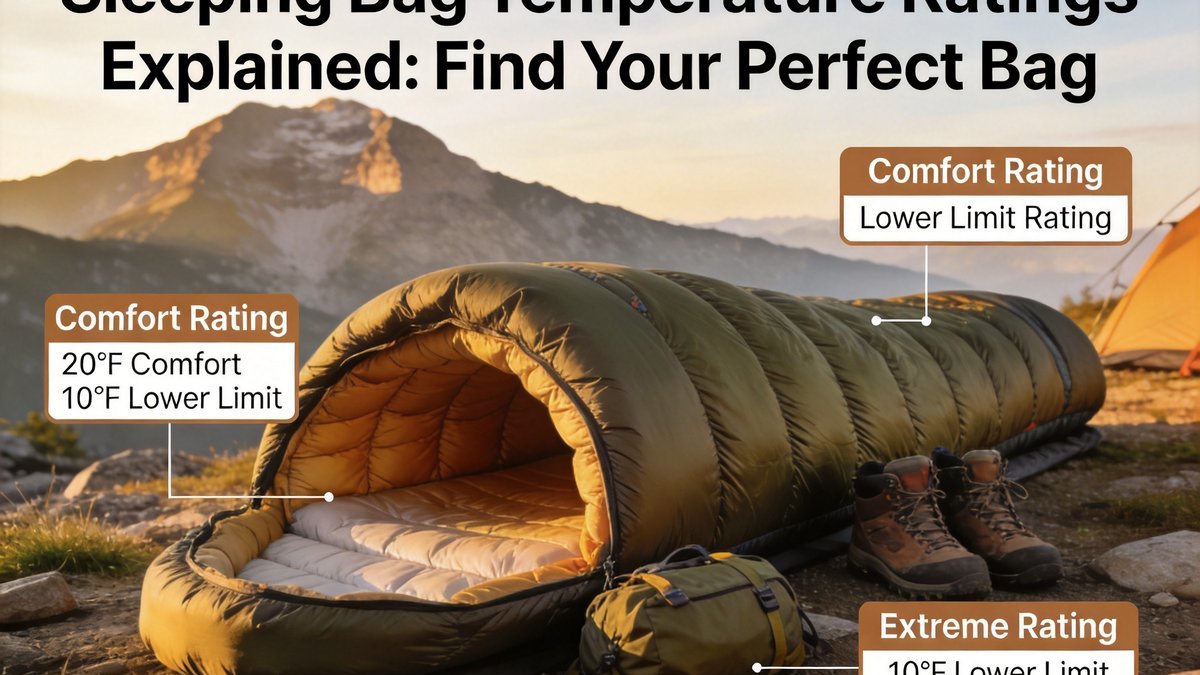
Sleeping bag temperature ratings follow the EN/ISO standard, which tests bags using a heated mannequin in controlled conditions. The standard provides three numbers: the comfort rating, the lower limit rating, and the extreme rating. Most manufacturers advertise the lower limit rating, which means a bag rated for 20 degrees keeps warm sleepers comfortable at 20 degrees but most people need it to be 30 to 35 degrees for genuine comfort. Women-specific bags typically have higher comfort ratings than unisex bags at the same advertised lower limit. Consider your personal sleeping temperature preference when selecting a bag, as individual metabolism varies significantly.
Down insulation, made from goose or duck feathers, provides the best warmth-to-weight ratio of any insulation material. High-quality down with 800+ fill power compresses smaller than synthetic alternatives, making it ideal for backpacking. Down lasts longer than synthetic, maintaining its loft for decades with proper care. However, down loses nearly all insulating ability when wet and takes a long time to dry. Synthetic insulation uses polyester fibers that trap warm air similarly to down but at greater weight and bulk for the same warmth. Synthetic bags perform better in humid conditions because they retain some insulation when wet and dry much faster. Modern synthetic fills like Primaloft and Climashield approach down's performance while costing significantly less.
Bag shape affects warmth, weight, and sleeping comfort. Mummy bags feature a tapered shape that eliminates excess air space, making them the most thermally efficient design. The close-fitting hood with drawcord traps heat around your head, preventing significant heat loss. Rectangular bags provide more room to move but sacrifice thermal efficiency. Semi-rectangular bags offer a compromise. Quilts eliminate the back insulation that compresses under your body and provides no insulating value, saving 6 to 10 ounces compared to equivalent mummy bags. Look for features like draft collars, zipper draft tubes, and anti-snag zipper guards that improve thermal performance.
Most three-season campers should choose a bag rated 10 to 20 degrees below the coldest temperature they expect to encounter. If you typically camp in 40-degree summer nights, a 20 to 30-degree bag provides a comfortable margin. If you run cold while sleeping, add 10 degrees to your temperature requirement. Women typically sleep colder than men and may need a bag rated 10 degrees warmer. For winter camping, choose a 0-degree or colder bag and pair it with an insulated pad rated for winter conditions. Layer bag liners to extend your bag's temperature range without buying multiple bags.
| Model | Temp Rating | Fill | Weight | Best For | Price |
|---|---|---|---|---|---|
| Nemo Disco 30 | 30F | Down | 2.2 lbs | Three-season camping | $350 |
| Marmot Always Summer | 35F | Synthetic | 2.5 lbs | Summer camping | $160 |
| Western Mountaineering Versalite | 10F | Down | 2.5 lbs | Cold weather backpacking | $635 |
| REI Co-op Magma 15 | 15F | Down | 2.1 lbs | Three-season backpacking | $499 |
| Big Agnes Lost Ranger 0 | 0F | Down | 3.1 lbs | Winter camping | $500 |
| Therm-a-Rest Questar 20 | 20F | Down | 2.3 lbs | Ultralight backpacking | $380 |
The most common sleeping bag mistake is buying a bag rated for colder temperatures than you actually need. A 0-degree bag used in 40-degree weather means you sleep sweating and unzip the bag, defeating its purpose. Buy for your typical conditions, not your imagined extreme.
A sleeping bag's insulation only works if it has loft. Compressed insulation traps no air and provides no warmth. This is why a high-quality sleeping pad matters as much as the bag itself.
Store your sleeping bag loosely in a large cotton or mesh storage sack, never compressed. Down bags require special cleaning with down-specific detergent. Synthetic bags can be machine washed on gentle cycle. Proper care extends bag life to 10-20 years.
600-650 fill power offers good value for car camping. 700-800 fill power balances weight and cost for most backpackers. 850+ fill power provides maximum warmth per ounce for serious backpacking at premium prices.
Women-specific sleeping bags typically have more insulation in the foot and torso areas, a narrower shoulder width, and a higher comfort rating. Women who sleep cold find the extra cost worthwhile.
You can extend a bag's temperature range by 10 to 15 degrees using a liner, wearing thermal base layers, and using a hot water bottle. However, pushing a summer bag into winter conditions risks a dangerously cold night.
Respecting other campers and the environment makes the experience better for everyone. Keep noise levels down, especially after quiet hours. Observe the 200-foot rule for setting up camp away from water sources and trails. Pack out all trash, including biodegradable items like apple cores, which take weeks to decompose in natural environments. Following these principles ensures campsites remain pristine for future visitors.
Testing your gear before heading into the backcountry prevents unpleasant surprises. Set up your tent in the backyard and spray it with a hose to check for leaks. Test your stove outside to ensure it lights and burns evenly. Break in new boots with short walks before a long hike. A pre-trip gear check takes an hour and can save you from a miserable night in the woods.
Proper food storage protects both you and the wildlife in the area. Store all food, trash, and scented items in bear-proof containers or hang them from a designated pole at least 10 feet off the ground and 4 feet from the nearest tree trunk. Cook at least 100 yards from your tent to avoid attracting animals to your sleeping area. Never store food inside your tent, even for a short nap.
Respecting other campers and the environment makes the experience better for everyone. Keep noise levels down, especially after quiet hours. Observe the 200-foot rule for setting up camp away from water sources and trails. Pack out all trash, including biodegradable items like apple cores, which take weeks to decompose in natural environments. Following these principles ensures campsites remain pristine for future visitors.
Testing your gear before heading into the backcountry prevents unpleasant surprises. Set up your tent in the backyard and spray it with a hose to check for leaks. Test your stove outside to ensure it lights and burns evenly. Break in new boots with short walks before a long hike. A pre-trip gear check takes an hour and can save you from a miserable night in the woods.
Proper food storage protects both you and the wildlife in the area. Store all food, trash, and scented items in bear-proof containers or hang them from a designated pole at least 10 feet off the ground and 4 feet from the nearest tree trunk. Cook at least 100 yards from your tent to avoid attracting animals to your sleeping area. Never store food inside your tent, even for a short nap.
Respecting other campers and the environment makes the experience better for everyone. Keep noise levels down, especially after quiet hours. Observe the 200-foot rule for setting up camp away from water sources and trails. Pack out all trash, including biodegradable items like apple cores, which take weeks to decompose in natural environments. Following these principles ensures campsites remain pristine for future visitors.
Testing your gear before heading into the backcountry prevents unpleasant surprises. Set up your tent in the backyard and spray it with a hose to check for leaks. Test your stove outside to ensure it lights and burns evenly. Break in new boots with short walks before a long hike. A pre-trip gear check takes an hour and can save you from a miserable night in the woods.
Proper food storage protects both you and the wildlife in the area. Store all food, trash, and scented items in bear-proof containers or hang them from a designated pole at least 10 feet off the ground and 4 feet from the nearest tree trunk. Cook at least 100 yards from your tent to avoid attracting animals to your sleeping area. Never store food inside your tent, even for a short nap.
Respecting other campers and the environment makes the experience better for everyone. Keep noise levels down, especially after quiet hours. Observe the 200-foot rule for setting up camp away from water sources and trails. Pack out all trash, including biodegradable items like apple cores, which take weeks to decompose in natural environments. Following these principles ensures campsites remain pristine for future visitors.