Table of Contents
Discover quality outdoor gear under $50. Budget-friendly recommendations for camping, hiking, and fishing essentials that perform well without breaking the bank.
Jordan Myers
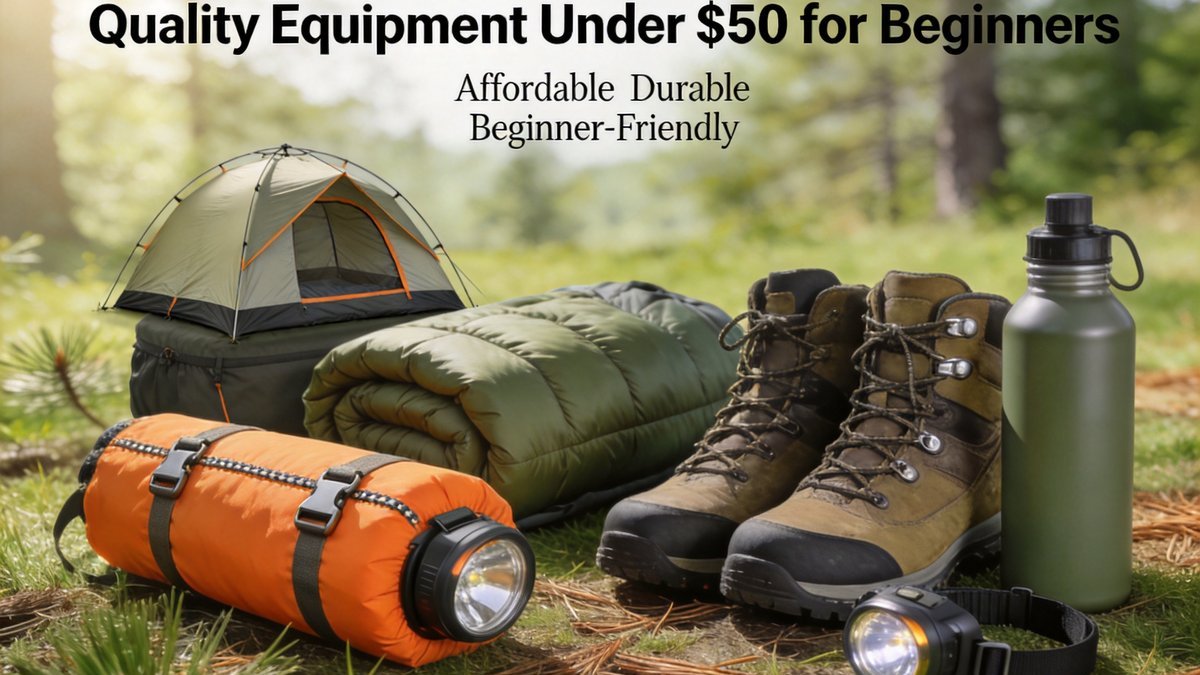
Discover quality outdoor gear under $50. Budget-friendly recommendations for camping, hiking, and fishing essentials that perform well without breaking the bank.
Outdoor gear does not have to cost a fortune. While premium equipment offers advantages for serious enthusiasts, plenty of quality gear performs admirably for beginners at surprisingly affordable prices. We tested budget-friendly outdoor gear to find the best options under $50.
Several camping gear categories offer excellent budget options. The Klymit Static V sleeping pad provides impressive comfort at $45 with its V-chamber design. The REI Co-op Camp X chair offers padded comfort at $45. The GSI Outdoors Pinnacle Solo cook set provides a complete cooking system at $35 with stainless steel construction that withstands campfire use.
The Black Diamond Spot 325 headlamp delivers 325 lumens and IPX8 waterproof rating at $35. The Sawyer Squeeze water filter at $40 uses the same hollow fiber membrane technology as higher-end systems. Trekking pole options like Trail Buddy poles at $40 offer aluminum construction and adjustable length approaching $100 pole performance.
The Suunto A-10 compass provides reliable baseplate navigation at under $20. The Lifesystems Clutch First Aid Kit at $25 contains comprehensive trail injury supplies. The SOL Emergency Bivvy at $20 reflects 90 percent of body heat at 3.8 ounces. The Fox 40 whistle at $10 produces 115 decibels for emergency signaling.
Apply the buy cheap, upgrade later approach to camp furniture, cook systems, water bottles, and headlamps. Invest in footwear, shelter, sleeping bags, and backpacks where failure creates safety risks. Watch for sales at outdoor retailers. Consider used gear from REI Used Gear or Gear Trade.
| Category | Product | Price | Key Features | Best For |
|---|---|---|---|---|
| Headlamp | Black Diamond Spot 325 | $35 | 325 lumens, IPX8 waterproof | Night hiking, camp tasks |
| Camp Chair | REI Co-op Camp X | $45 | 2.5 lbs, padded seat | Car camping comfort |
| Cook Set | GSI Outdoors Pinnacle Solo | $35 | Stainless steel, nesting | Solo backpacking |
| Water Filter | Sawyer Squeeze | $40 | 0.1 micron, 100k gal capacity | Backpacking filtration |
| Sleeping Pad | Klymit Static V | $45 | R-value 1.3, packable | Summer camping |
| Camp Stove | BRS 3000T | $25 | 0.9 oz, 10,000 BTU | Ultralight backpacking |
Buying cheap outdoor gear means accepting trade-offs in weight and durability. A $25 camp stove works but simmers less evenly than a $60 model. The key is knowing which trade-offs affect your specific use case.
The most expensive gear is not always best for beginners. A $600 ultralight tent offers less space than a $250 car camping tent that better suits a family. Match the gear to your actual use.
A complete budget sleep system is achievable under $50 with careful choices. The Kelty Cosmic 40-degree synthetic sleeping bag at $45 provides reliable warmth for summer camping with a synthetic fill that retains insulation even when damp. For warmer conditions, a simple fleece sleeping bag liner at $25 extends a bag's temperature range or works alone in mild weather. The Klymit Static V sleeping pad at $45 offers the best comfort-to-price ratio with its V-chamber design that supports side sleepers.
Budget sleeping bags are heavier than premium options and compress larger. Accept these trade-offs for car camping and short backpack trips. Use a compression sack to reduce packed volume. Add a closed-cell foam pad under your inflatable pad for extra insulation and puncture protection. A foam pad from brands like Therm-a-Rest or Nemo costs $15-25 and adds warmth while protecting your inflatable pad from ground punctures. This layering approach provides comfort equal to a $200 system for under $50.
Quality budget backpacks exist for under $50, though capacity and features are limited. The Teton Sports Scout 34 at $45 offers a 3400-cubic-inch capacity suitable for weekend trips with adjustable torso length and a hydration sleeve. For day hikes, the Osprey Daylite Plus at $45 provides excellent organization and a comfortable back panel. The REI Co-op Trail 25 frequently goes on sale near $40 and offers excellent durability for a day pack. Avoid generic unbranded backpacking packs under $40, which typically lack adequate frame structures and fail under loads over 15 pounds.
Where budget really matters is in pack fit. An ill-fitting pack causes discomfort regardless of price. Measure your torso length before shopping and choose a pack with an adjustable suspension system. Load the pack with 15-20 pounds in the store and walk around for 10 minutes before buying. The hip belt should carry 80 percent of the weight, with the shoulder straps providing stability rather than support. If your budget is under $50, focus on day packs or very short trips. Save for a proper fitting backpack before attempting multi-day trips with significant weight.
A reliable cooking setup on a budget starts with the right stove choice. The BRS-3000T at $20 is the lightest canister stove available at 0.9 ounces and works well for boiling water. The Etekcity Ultralight at $17 offers similar performance with a wider burner head for better stability. Pair either stove with a basic 750ml titanium pot at $25 from brands like Toaks or Bulin, which provides enough capacity for dehydrated meals and hot drinks for one person. A long-handled spoon and a small plastic cup complete a functional cook kit for under $50.
Hydration on a budget is straightforward. A Sawyer Squeeze water filter at $30 provides reliable protection against bacteria and protozoa and includes a squeeze bag for backcountry use. Reuse disposable plastic water bottles instead of buying expensive hydration bottles, as they weigh less and are easily replaceable. A 2-liter capacity using two 1-liter disposable bottles covers most day hikes. For multi-day trips, add an extra 2-liter collapsible bottle for dry sections. Electrolyte powders bought in bulk save money compared to individually packaged tablets and provide better hydration.
Building a complete budget gear system is a process of strategic purchases over several months rather than buying everything at once. Start with the essentials: a backpack, sleeping bag, sleeping pad, and shelter. Purchase these items in order of personal priority, borrowing or renting until you own each piece. Watch for seasonal sales at REI, Backcountry, and Moosejaw where last year's models are discounted 30 to 50 percent in late fall and early spring. Used gear from Gear Trade, r/geartrade, or Facebook Marketplace offers reliable equipment at 40 to 60 percent of retail prices.
Prioritize spending on the items that directly affect safety and comfort. A quality sleeping pad that provides insulation and support is worth spending on, while a budget sleeping bag with a synthetic fill retains adequate warmth for three-season use. Invest in quality rain gear and a reliable stove, as these directly affect safety. Save money on items where budget options perform adequately: camp pillow, stuff sacks, trekking poles, and basic clothing layers. A complete budget gear system for three-season backpacking is achievable for $300-$500 purchased strategically over time, compared to $1500-$2500 for premium gear that performs only marginally better.
Budget gear works for well-maintained trails and fair-weather camping. For extreme weather or remote locations, invest in higher-quality equipment.
A quality headlamp. The Black Diamond Spot series at $35 represents the biggest quality-of-life improvement per dollar spent.
Stick to reputable outdoor brands for safety-critical items. Read multiple reviews and test all gear before depending on it.
Invest in your backpack if carrying loads over 15 pounds. A poorly fitting pack causes pain that ruins trips. Budget day packs from reputable brands perform adequately for light loads.
Developing a consistent navigation routine keeps you oriented throughout the day. Every time you stop for a water break or snack, pull out your map and identify your current location. Note the next landmark you expect to see and the approximate time to reach it. This habit of regular map checks prevents the gradual disorientation that leads to getting lost. Experienced hikers recommend taking a bearing every 30 to 45 minutes in unfamiliar terrain, even when the trail seems obvious.
Before any hike, study the route on a map and identify key waypoints, bailout points, and potential hazards. Note the direction of ridges, valleys, and water features so you can use them as natural handrails. Share your planned route with someone who will notice if you do not return on time. Proper pre-trip planning transforms a potentially stressful navigation challenge into an enjoyable day on the trail.
When hiking in a group, designate a dedicated navigator rather than assuming everyone knows the route. This prevents the common scenario where each person thinks someone else is leading. At every junction, confirm the correct direction as a group before proceeding. A quick group check takes thirty seconds but can save hours of backtracking if the wrong turn is taken.