Table of Contents
Learn how to choose the perfect camping tent. Complete guide covering tent sizes, season ratings, materials, and setup tips for every camping style.
Jordan Myers
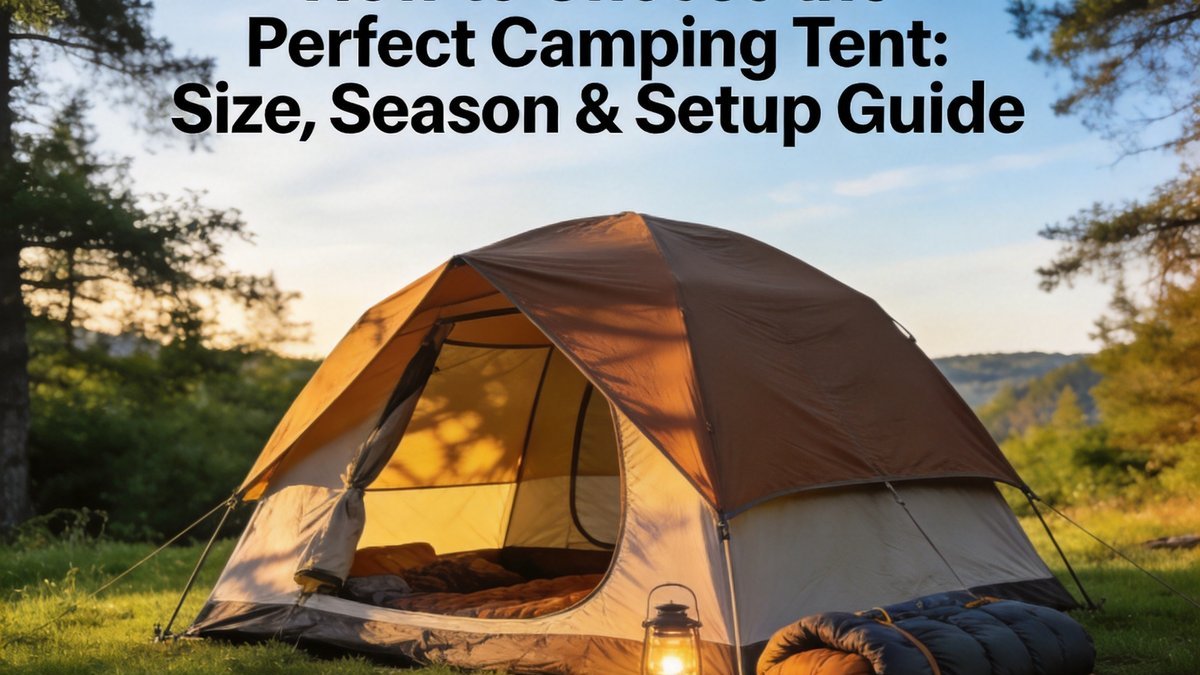
Learn how to choose the perfect camping tent. Complete guide covering tent sizes, season ratings, materials, and setup tips for every camping style.
Choosing a camping tent might seem straightforward until you walk into an outdoor store and face dozens of options in every size, shape, and price range. The right tent transforms a camping trip into a comfortable home away from home. The wrong one leaves you wet, cold, and wishing you had stayed home. This guide walks through everything you need to know to pick the perfect tent for your adventures.
Tent manufacturers specify capacity ratings, but these numbers can be misleading. A 2-person tent comfortably fits two sleeping pads side by side with minimal extra space for gear. If you want room to move, store equipment inside, or escape rainy weather, size up. Families and couples sharing a tent for extended trips should consider a 4-person tent for two people, or a 6-person tent for a family of four. The extra space makes a significant difference in comfort during multi-day trips or when bad weather keeps you inside for hours. Pack your tent in a stuff sack that keeps it compact while providing enough compression for easy packing. Store it loosely at home to maintain its waterproof coating and extend its lifespan.
Three-season tents dominate the market because they handle spring, summer, and fall conditions for most campers. These tents balance weight, ventilation, and weather protection with mesh panels for airflow and rainfly coverage for storms. Four-season or mountaineering tents add stronger poles, heavier fabrics, and snow-shedding designs for winter camping and alpine environments. They trade ventilation for durability, which means condensation builds up faster in mild conditions. If you camp exclusively in summer, a three-season tent with adequate ventilation prevents morning condensation. Winter campers and mountaineers need the structural integrity of a four-season design to handle snow loads and high winds.
Tent poles determine strength and weight. Aluminum poles offer the best balance of durability and weight for most campers. DAC poles represent the gold standard in aluminum tent poles with excellent strength-to-weight ratios. Budget tents often use fiberglass poles that are heavier and more prone to cracking under stress or in cold temperatures. Pole diameters of 8.5mm to 9.5mm provide good strength for car camping tents, while ultralight backpacking tents use thinner poles around 7.5mm to 8.5mm. The rainfly material matters too. Silicone-impregnated nylon offers superior waterproofing and lighter weight compared to coated PU nylon, though it costs more. Seam-sealed construction prevents water from seeping through stitch holes, so check that all critical seams are factory-sealed before purchasing.
Freestanding tents set up anywhere without stakes, making them ideal for platform campsites, sandy beaches, and rocky terrain. They use a frame of connected poles that support the tent body independently. Semi-freestanding tents reduce weight by using fewer poles while requiring stakes for full structure. Non-freestanding or trekking-pole tents save maximum weight by using hiking poles as support, popular among ultralight backpackers but requiring proper staking. Instant or pop-up tents feature pre-attached poles that unfold quickly, sacrificing pack size for convenience. Practice setting up any new tent at home before your first trip. Fumbling with unfamiliar poles and clips at dusk in the rain turns a simple process into a frustrating ordeal.
Entry-level campers find excellent value in brands like REI Co-op, Kelty, and The North Face for car camping tents under $200. Mid-range tents from Big Agnes, MSR, and Marmot offer better materials and lighter weights for backpackers spending $250 to $450. Premium tents from Hilleberg, Hyperlite Mountain Gear, and Zpacks use advanced materials for extreme conditions and ultralight performance, costing $500 to $1,000 or more. A quality tent represents an investment that lasts 5 to 10 years with proper care, making it worth prioritizing in your gear budget over accessories you use less frequently.
The golden rule of tent sizing: take the manufacturer's capacity rating and subtract one. If the tag says 4-person, it comfortably sleeps three adults with gear. Use this rule and you will never feel cramped at the end of a long hiking day.
A tent is the one piece of gear where buying cheap costs more in the long run. A $99 tent leaks after two seasons and ends up in a landfill. A $300 tent from a reputable brand lasts a decade with proper care. Spread the cost over ten years and the math becomes obvious.
Three-season tents can handle light snow and cold temperatures in a pinch, but they are not designed for heavy snow loads or sustained winter winds. The poles may break under snow weight, and the fabric may not hold body heat effectively. For regular winter camping, invest in a four-season tent with stronger poles and a more aerodynamic shape that sheds snow.
Clean your tent with mild soap and cold water after each trip. Dry it completely before storing to prevent mold and mildew. Store the tent loosely in a large cotton sack or breathable container rather than compressing it in the stuff sack, which degrades the waterproof coating over time. Never machine wash or dry your tent.
A footprint is a custom-sized groundsheet designed specifically for your tent model that fits exactly under the tent floor. A tarp is a general-purpose ground cover that you can cut or fold to size. Footprints are lighter and more precise, while tarps are cheaper and more versatile. Either one extends your tent floor life significantly.
With proper care, a quality tent lasts 5 to 10 years of regular use. Factors that affect lifespan include UV exposure, storage conditions, frequency of use, and how carefully you set up and take down the tent. Replacing guylines and seam-sealing every few years extends the life further.
Respecting other campers and the environment makes the experience better for everyone. Keep noise levels down, especially after quiet hours. Observe the 200-foot rule for setting up camp away from water sources and trails. Pack out all trash, including biodegradable items like apple cores, which take weeks to decompose in natural environments. Following these principles ensures campsites remain pristine for future visitors.
Testing your gear before heading into the backcountry prevents unpleasant surprises. Set up your tent in the backyard and spray it with a hose to check for leaks. Test your stove outside to ensure it lights and burns evenly. Break in new boots with short walks before a long hike. A pre-trip gear check takes an hour and can save you from a miserable night in the woods.
Proper food storage protects both you and the wildlife in the area. Store all food, trash, and scented items in bear-proof containers or hang them from a designated pole at least 10 feet off the ground and 4 feet from the nearest tree trunk. Cook at least 100 yards from your tent to avoid attracting animals to your sleeping area. Never store food inside your tent, even for a short nap.
Respecting other campers and the environment makes the experience better for everyone. Keep noise levels down, especially after quiet hours. Observe the 200-foot rule for setting up camp away from water sources and trails. Pack out all trash, including biodegradable items like apple cores, which take weeks to decompose in natural environments. Following these principles ensures campsites remain pristine for future visitors.
Testing your gear before heading into the backcountry prevents unpleasant surprises. Set up your tent in the backyard and spray it with a hose to check for leaks. Test your stove outside to ensure it lights and burns evenly. Break in new boots with short walks before a long hike. A pre-trip gear check takes an hour and can save you from a miserable night in the woods.
Proper food storage protects both you and the wildlife in the area. Store all food, trash, and scented items in bear-proof containers or hang them from a designated pole at least 10 feet off the ground and 4 feet from the nearest tree trunk. Cook at least 100 yards from your tent to avoid attracting animals to your sleeping area. Never store food inside your tent, even for a short nap.
Respecting other campers and the environment makes the experience better for everyone. Keep noise levels down, especially after quiet hours. Observe the 200-foot rule for setting up camp away from water sources and trails. Pack out all trash, including biodegradable items like apple cores, which take weeks to decompose in natural environments. Following these principles ensures campsites remain pristine for future visitors.
Testing your gear before heading into the backcountry prevents unpleasant surprises. Set up your tent in the backyard and spray it with a hose to check for leaks. Test your stove outside to ensure it lights and burns evenly. Break in new boots with short walks before a long hike. A pre-trip gear check takes an hour and can save you from a miserable night in the woods.