Table of Contents
Start freshwater fishing with confidence. Learn essential gear, bait selection, casting techniques, and the best beginner fishing spots across America.
Jordan Myers
Start freshwater fishing with confidence. Learn essential gear, bait selection, casting techniques, and the best beginner fishing spots across America.
Freshwater fishing offers one of the most accessible gateways to outdoor recreation. A quiet lake at dawn, the gentle ripple of a bobber on the water, and the sudden thrill of a tug on the line create experiences that keep anglers coming back for a lifetime. This guide covers everything a beginner needs to start fishing with confidence.
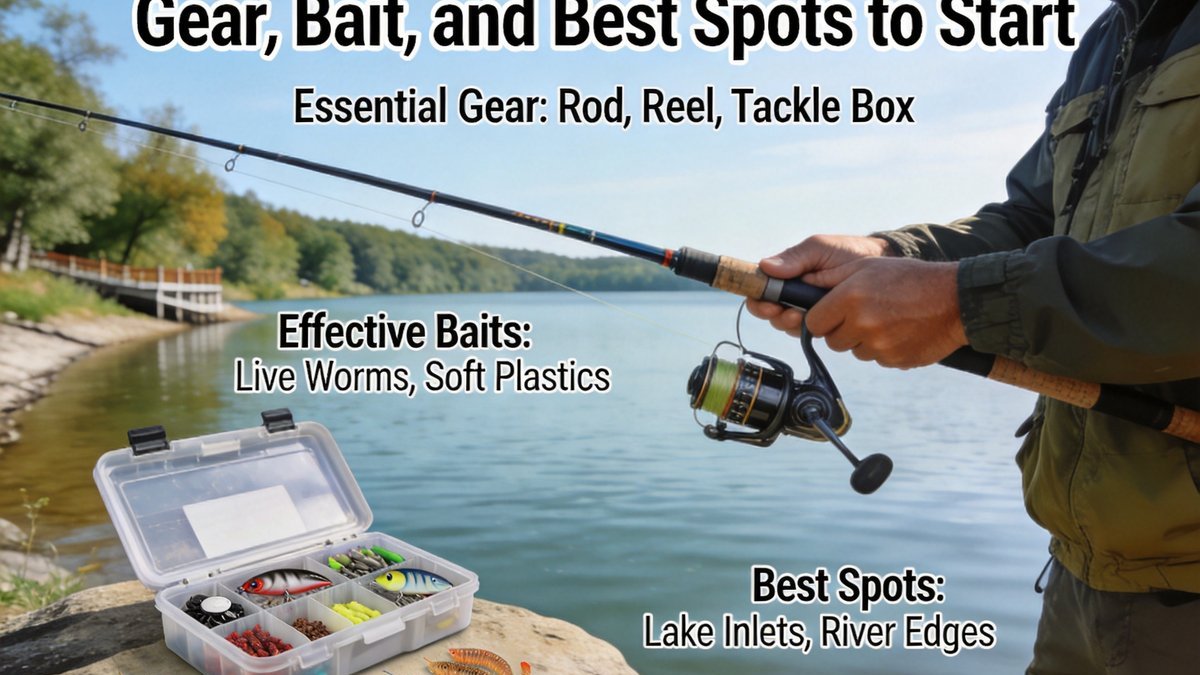
Starting with the right gear makes learning to fish much easier. A 6 to 7-foot medium-action spinning rod paired with a size 2500 to 3000 spinning reel provides the most versatile setup for freshwater fishing. This combination handles panfish, bass, trout, and catfish without being too specialized. Pre-spool the reel with 6 to 10-pound test monofilament line, which offers good strength and manageable handling for beginners. Your tackle box should include a selection of hooks in sizes 6 through 1/0, split shot weights, bobbers, snap swivels, and a variety of terminal tackle. Needle-nose pliers for removing hooks, a fishing net, and a stringer or cooler for keeping fish round out the essential gear list. As you gain experience, you can expand into specialized lures and techniques, but this basic setup catches fish from day one.
Bait choice directly affects your fishing success, especially as a beginner. Live bait consistently outperforms artificial lures for novice anglers because it smells and moves naturally in the water. Nightcrawlers and red wigglers catch almost every freshwater species and are available at any bait shop. Minnows work well for predatory fish like bass, walleye, and pike. Crickets and grasshoppers excel for panfish like bluegill and crappie. Prepared baits like Power Bait and dough balls work well for stocked trout when fished on the bottom with a sliding sinker rig. Artificial lures become more effective as you develop casting and retrieval skills. Start with a few basic lures: inline spinners like Rooster Tails for trout and panfish, spinnerbaits for bass, and small crankbaits for walleye. Match your lure size to the fish you are targeting.
Fish concentrate in specific areas based on food availability, water temperature, oxygen levels, and structure. Learning to read water significantly improves your catch rate. In lakes, fish relate to structure like submerged rocks, fallen trees, weed lines, drop-offs, and points of land that extend into the water. These features provide cover and concentrate prey species. In rivers and streams, fish hold in eddies behind rocks, in deep pools, along undercut banks, and at the confluence of tributaries. Public fishing access points exist on most major waterways. State fish and wildlife agencies maintain detailed maps and guides to public fishing waters. Local bait shops provide invaluable information about current conditions, hot spots, and what fish are biting. Build relationships with local anglers and shop owners for the best insider knowledge.
Mastering basic casting technique opens up more water and increases your catch rate. For spinning gear, hold the rod with your dominant hand and open the bail with your other hand. Pinch the line against the rod grip with your index finger. Bring the rod tip back smoothly, then accelerate forward, releasing the line when the rod tip reaches eye level. Practice this motion in an open field before heading to the water. Once you cast, watch your bobber for any movement that indicates a fish has taken your bait. When the bobber goes under, wait one second, then smoothly lift the rod tip to set the hook. For bottom fishing, watch your rod tip for taps or bends. When you feel a fish, lift the rod firmly to set the hook, keep the rod tip up, and reel steadily to bring the fish in. Patience and practice improve your casting accuracy and hook-setting timing.
The best fishing advice for beginners: fish where the fish are. This sounds obvious, but many new anglers cast randomly across open water and wonder why they catch nothing. Focus on structure, weed lines, drop-offs, and cover. Fifteen minutes fishing a productive spot beats an hour casting into empty water.
A bad day of fishing still beats a good day at work, but a prepared day of fishing beats both. Check the weather, bring the right bait, arrive during prime feeding times, and fish where the fish actually live. Luck favors the prepared angler.
Yes, every state requires a fishing license for anglers above a certain age. License fees fund conservation and fishery management programs. Purchase licenses online through your state fish and wildlife agency website or at local bait shops and sporting goods stores. Most states offer single-day, multi-day, and annual options.
Panfish like bluegill, sunfish, and crappie are the easiest freshwater fish to catch. They are abundant in most waters, eager to bite simple bait, and provide excellent eating. Bluegill in particular will bite almost anything presented near their cover, making them perfect for building confidence and practicing skills.
Wet your hands before touching fish to protect their slime coat. Use needle-nose pliers to remove hooks gently. Hold the fish horizontally, supporting its weight, never by the jaw or gills for larger fish. For catch and release, revive the fish by holding it upright in the water facing into the current until it swims away on its own.
Early morning from dawn until about 9 AM and evening from about 4 PM until dusk are consistently the most productive fishing times. Fish feed actively during low-light periods when they feel safer from predators and prey species are more active. Midday fishing can be productive in cloudy conditions or during seasonal transitions.
Learning to read the water is one of the most valuable skills an angler can develop. Fish hold in areas where they can access food with minimal energy expenditure. Look for eddies behind rocks, current seams where fast and slow water meet, and deep pools where fish rest during bright daylight hours. In rivers, the most productive spots are often where smaller tributaries join the main channel, bringing fresh food and oxygenated water.
Successful anglers pay close attention to what fish are naturally eating. Before choosing your bait or lure, spend a few minutes observing the water. Look for insects flying near the surface, check under rocks for nymphs, and note what local baitfish look like. Matching your presentation to the natural food source dramatically increases your catch rate. In saltwater, pay attention to bird activity, which often indicates baitfish schools below.
Practicing ethical angling ensures fish populations remain healthy for future generations. Use barbless hooks or pinch down barbs for easier release with less damage to the fish. Wet your hands before handling fish to protect their slime coat. Minimize air exposure by keeping fish in the water while removing hooks. If you plan to release your catch, avoid using treble hooks and stop fishing when fish show signs of stress in warm water conditions.
Learning to read the water is one of the most valuable skills an angler can develop. Fish hold in areas where they can access food with minimal energy expenditure. Look for eddies behind rocks, current seams where fast and slow water meet, and deep pools where fish rest during bright daylight hours. In rivers, the most productive spots are often where smaller tributaries join the main channel, bringing fresh food and oxygenated water.
Successful anglers pay close attention to what fish are naturally eating. Before choosing your bait or lure, spend a few minutes observing the water. Look for insects flying near the surface, check under rocks for nymphs, and note what local baitfish look like. Matching your presentation to the natural food source dramatically increases your catch rate. In saltwater, pay attention to bird activity, which often indicates baitfish schools below.
Practicing ethical angling ensures fish populations remain healthy for future generations. Use barbless hooks or pinch down barbs for easier release with less damage to the fish. Wet your hands before handling fish to protect their slime coat. Minimize air exposure by keeping fish in the water while removing hooks. If you plan to release your catch, avoid using treble hooks and stop fishing when fish show signs of stress in warm water conditions.
Learning to read the water is one of the most valuable skills an angler can develop. Fish hold in areas where they can access food with minimal energy expenditure. Look for eddies behind rocks, current seams where fast and slow water meet, and deep pools where fish rest during bright daylight hours. In rivers, the most productive spots are often where smaller tributaries join the main channel, bringing fresh food and oxygenated water.
Successful anglers pay close attention to what fish are naturally eating. Before choosing your bait or lure, spend a few minutes observing the water. Look for insects flying near the surface, check under rocks for nymphs, and note what local baitfish look like. Matching your presentation to the natural food source dramatically increases your catch rate. In saltwater, pay attention to bird activity, which often indicates baitfish schools below.