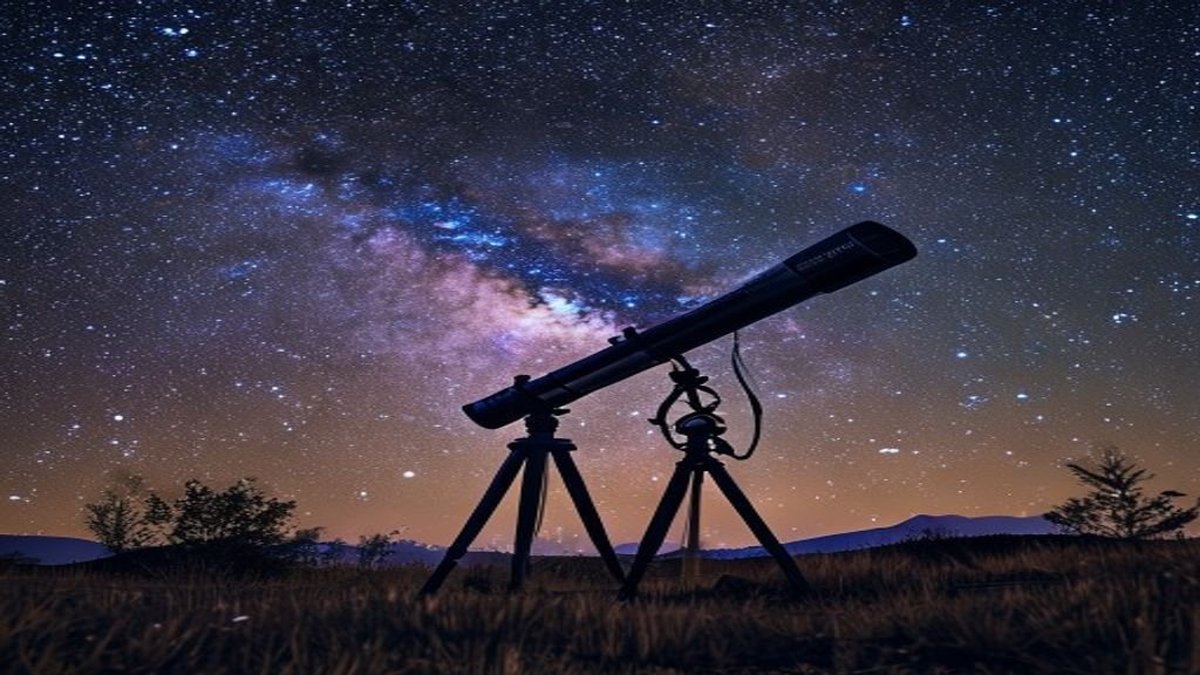
Why Your First Telescope Choice Matters More Than You Think
Your first telescope can make or break your stargazing hobby. Pick the wrong one, and you will spend more time fiddling with knobs than actually looking at the night sky. The three main types you will encounter are refractors, reflectors, and Dobsonians, and they each serve different needs.
A good rule of thumb: aperture (the diameter of the main lens or mirror) is always more important than magnification. A telescope with a 4-inch aperture will show you more detail than one with a 2-inch aperture, even if the smaller scope claims higher magnification. For beginners, look for at least 70mm (2.8 inches) of aperture to get clear views of the Moon and Jupiter's cloud bands.
"Most beginners overestimate the importance of magnification and underestimate the importance of aperture and mount stability. A wobbly tripod with high power is worse than a steady one with moderate power." — Dr. Helena Marks, Astrophysicist and Amateur Astronomy Instructor
Refractor Telescopes: Sharp Views, Simple Setup
Refractors use lenses to bend light into focus. They are the classic telescope design you see in old movies, and they offer crisp, high-contrast images with almost no maintenance. You will love a refractor if you want to quickly set up in your backyard and look at the Moon, planets, or bright star clusters.
The downside is price. For the same aperture, a refractor costs two to three times more than a reflector. A decent 90mm refractor might run you $300, while a 130mm reflector can cost half that. Also, larger refractors get heavy and require a beefy mount, which adds to the cost. Stick with a 70mm to 80mm refractor if your budget is under $400.
Another limitation: chromatic aberration. Cheaper refractors often show a purple or blue fringe around bright objects like the Moon. Look for models labeled "ED" (extra-low dispersion) or "apochromatic" if you want to avoid this, but expect to pay more.
Reflector Telescopes: More Bang for Your Buck
Reflectors use mirrors instead of lenses. This design gives you the most aperture per dollar, making them a solid choice for beginners who want to see deep-sky objects like galaxies, nebulae, and star clusters. A 6-inch (150mm) reflector can cost around $250 to $350 and will show you the rings of Saturn and the Orion Nebula with impressive detail.
Reflectors do require a little more care. You will need to collimate (align) the mirrors occasionally, which sounds harder than it is. Most modern reflectors come with simple collimation tools, and you can learn the process in under 20 minutes. Also, the open tube design means dust can settle on the mirror over time, but a gentle blast of compressed air usually fixes that.
One practical tip: avoid reflectors with spherical mirrors. They produce blurry images at higher magnifications. Look for "parabolic" mirrors, which focus light correctly. A 4.5-inch parabolic reflector is a great starter scope, but a 6-inch is the sweet spot for serious visual observation without breaking your back carrying it outside.
"A 6-inch Dobsonian reflector will show you more celestial objects in one night than a 3-inch refractor will in a month. It is the single best value-for-money telescope for a beginner who is serious about deep-sky observation." — Tom Gallagher, Lead Instructor at the Pacific Astronomy Workshop
Dobsonian Telescopes: The Beginner's Deep-Sky Powerhouse
A Dobsonian is simply a Newtonian reflector mounted on a simple, rocker-box base instead of a tripod. This design, popularized by John Dobson in the 1960s, maximizes aperture while minimizing cost and complexity. You get a huge light bucket for a fraction of the price of other designs.
For example, an 8-inch Dobsonian typically costs around $400 to $500. That same aperture in a refractor would cost over $2,000. The trade-off is size. An 8-inch Dobsonian tube is about four feet long and weighs 30 to 40 pounds. You will need a car to transport it to dark-sky sites, but it is easy to carry as two pieces (tube and base).
Dobsonians are also incredibly simple to use. No tripod to level, no polar alignment, and no complex electronics. You just plop it down, point it at the sky, and adjust the altitude and azimuth motions by hand. This makes them perfect for star-hopping and learning the constellations. The only downside is that they do not track objects automatically, so you will need to nudge the tube every minute or two to keep planets centered at high magnification.
Mounts and Tripods: The Hidden Deal-Breaker
Many beginners ignore the mount and focus only on the telescope tube. That is a mistake. A shaky mount makes every star look like a blurry, dancing dot. There are two main types of mounts: alt-azimuth (simple up-down, left-right) and equatorial (tilted to match Earth's rotation).
For most beginners, a sturdy alt-azimuth mount is the best choice. It is intuitive and requires no setup beyond leveling the tripod. Equatorial mounts, while useful for long-exposure astrophotography, can be frustrating to align and learn. If you are not planning to take pictures, skip the equatorial mount for now.
Check the tripod legs before you buy. Metal legs with spreader bars are more stable than thin aluminum legs. A mount that wobbles when you tap the eyepiece will ruin your night. As a rule, the mount and tripod should weigh at least as much as the telescope tube. If the package looks too light, it probably is.
- Aperture: Aim for at least 70mm (refractor) or 130mm (reflector/Dobsonian).
- Mount: Alt-azimuth for simplicity; equatorial only if you plan to do astrophotography later.
- Eyepieces: A 25mm and a 10mm eyepiece cover most needs. Avoid kits with many cheap eyepieces.
- Finder scope: A red-dot finder or a 6x30 optical finder helps you locate objects.
- Weight: Your total setup should be easy for you to carry outside in one trip.
Budget Tips and Where to Buy Your First Scope
You do not need to spend a fortune to get started. A budget of $200 to $400 will get you a solid beginner telescope that will keep you entertained for years. Avoid department store telescopes with plastic parts and wild magnification claims like "575x" — those numbers are fake and the views will be terrible.
Stick with well-known brands like Celestron, Orion, Sky-Watcher, and Meade. Look for used telescopes on local classifieds or astronomy club swap meets. Many people buy a scope, use it twice, and sell it for half price. A used 6-inch Dobsonian for $150 is a steal and will outperform any new $200 refractor from a big-box store.
Finally, join an astronomy club before you buy. Most clubs have loaner telescopes and star parties where you can try different designs. You will quickly learn which style fits your lifestyle. For instance, if you live in an apartment without a balcony, a compact 80mm refractor might be better than a bulky 10-inch Dobsonian.
↑"I have seen dozens of beginners buy a cheap telescope, get frustrated with the poor views, and quit. Spend your money on a quality Dobsonian or a small refractor from a reputable brand, and you will be hooked for life." — Mariana Lopez, Editor-in-Chief of Night Sky Magazine