Table of Contents
Plan your first multi-day trek with confidence. Learn packing strategies, route planning, endurance training, and camp management for extended backpacking trips.
Jordan Myers
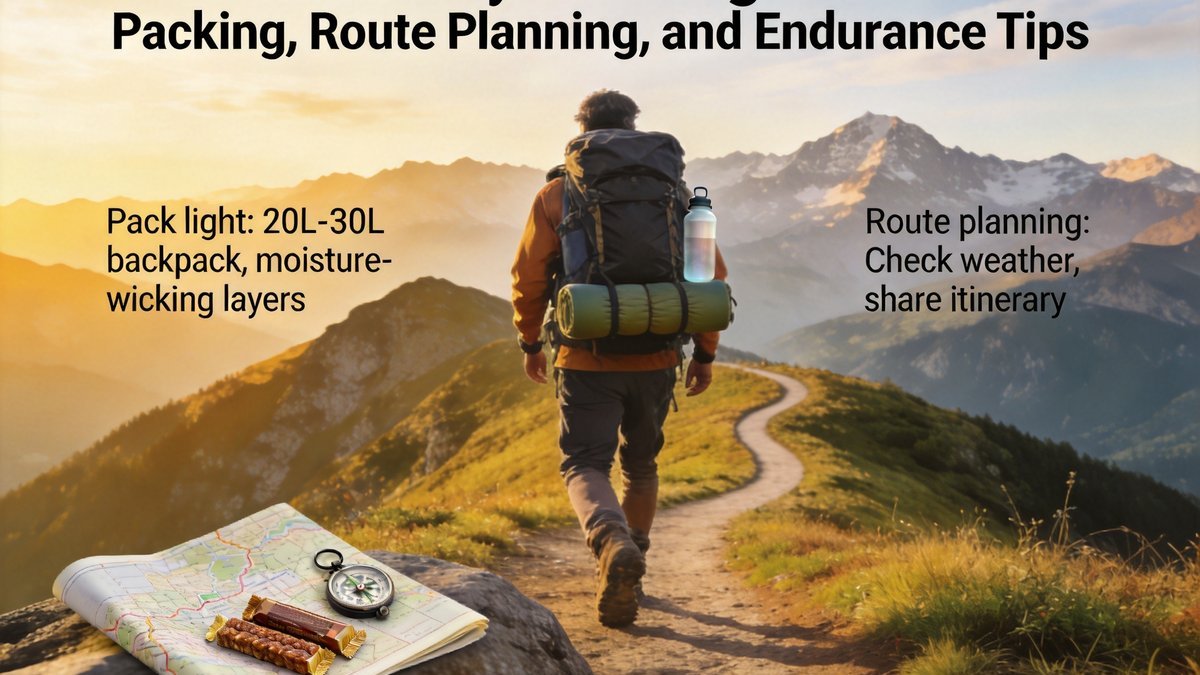
Plan your first multi-day trek with confidence. Learn packing strategies, route planning, endurance training, and camp management for extended backpacking trips.
Multi-day trekking represents the next level of outdoor adventure. Carrying everything you need on your back for days at a time changes how you experience the wilderness. Each day brings new landscapes, challenges, and the deep satisfaction of moving through the world under your own power. This guide covers everything you need to plan and execute your first multi-day trek.
Packing for multiple days requires a fundamentally different approach than day hiking. Every item must earn its place in your pack through utility and necessity. The ultralight philosophy emphasizes reducing weight through careful gear selection and eliminating duplicates. Start by listing all gear categories: shelter, sleep system, cooking, food, water, clothing, hygiene, first aid, navigation, and emergency items. Weigh each item and prioritize lighter alternatives for heavier categories. Shelter and sleep systems typically represent the heaviest category, so invest in a lightweight tent, sleeping bag, and sleeping pad first. Distribute weight evenly in your pack with heavy items close to your back and centered between your shoulders. Keep frequently used items like rain gear, snacks, and your first aid kit accessible in external pockets or near the top.
Multi-day routes require more thorough planning than day hikes. Study topographic maps of your route and identify campsites, water sources, bailout points, and potential hazards. Plan your daily mileage based on terrain difficulty rather than map distance. Ten miles on flat trail is dramatically different from ten miles with 4,000 feet of elevation gain. Identify reliable water sources along your route and carry enough capacity to reach the next source. In dry regions, this might mean carrying 4 to 6 liters. Download detailed offline maps and waypoints to your phone and GPS device. Carry a physical topographic map and compass as backup. Write down key navigation cues for each day: trail junctions, stream crossings, ridge traverses, and landmarks. Share your complete itinerary with someone at home and establish check-in times if you have satellite communication.
Preparing your body for multi-day trekking requires both cardiovascular conditioning and muscular endurance. Start training 8 to 12 weeks before your trip with a focus on sustained aerobic activity. Hiking with a loaded pack on local trails provides the most specific training. If trails are unavailable, stair climbing with a weighted pack offers excellent preparation. Include regular strength training for your legs, core, and back. Lunges, squats, step-ups, and deadlifts build the specific muscles used in backpacking. Practice hiking with your fully loaded pack at least four times before your trip, gradually increasing distance and elevation gain. On the trail, maintain a sustainable pace from the start. The first day of a multi-day trip often feels easy due to fresh legs and excitement. Resist the urge to push hard on day one, as fatigue accumulates over multiple days.
Efficient camp routines make multi-day trekking more enjoyable. Develop a systematic approach to setting up camp, cooking dinner, and preparing for the next day. Start looking for campsites at least an hour before sunset to allow plenty of daylight for setup. When you stop for the night, immediately change into dry camp clothes and put on insulating layers. This prevents the chill that sets in when your body cools down after hiking. Set up your shelter first, then prepare food and water. Filter enough water for dinner, breakfast, and the next day's hiking before dark. Organize your pack for the next morning before getting into your sleeping bag. Store all food, trash, and scented items properly for the night. In bear country, this means bear canisters or bear hangs. In all areas, it means keeping food away from your tent.
The first day of a multi-day trek is not a race. It is a warm-up for the days ahead. Hiking too fast on day one creates cumulative fatigue that turns day three into a survival exercise. Start slow, find your rhythm, and save your energy for the miles ahead.
A multi-day trek teaches you something important: how little you actually need to be happy. After three days on the trail, the luxury of a hot meal and a dry sleeping bag feels more satisfying than any possession at home ever did.
Plan for 1.5 to 2.5 pounds of food per person per day, providing 2,500 to 3,500 calories. Calorie-dense foods like nuts, dried fruit, peanut butter, tortillas, and cured meats pack the most energy per ounce. Dehydrated meals provide hot dinners with minimal weight. Pack an extra day of food for emergencies.
Pack biodegradable wipes, hand sanitizer, a small trowel for catholes, and a dedicated wash kit. Bathe in natural water sources using biodegradable soap at least 200 feet from the water. Change into clean sleeping clothes each night to keep your sleeping bag clean. Address hot spots and foot care immediately each evening.
Carry a comprehensive first aid kit and know how to use every item. A personal locator beacon or satellite messenger allows you to summon help in serious emergencies. For minor injuries, treat and rest. For serious injuries, stay put, signal for help, and conserve energy and resources while waiting.
A 10,000 to 20,000 m Ah power bank charges a phone 3 to 5 times. Solar panels work for extended trips but charge slowly and require direct sunlight. Minimize electronics use by downloading maps and reading material before your trip. Turn your phone on airplane mode to extend battery life significantly.
Developing a consistent navigation routine keeps you oriented throughout the day. Every time you stop for a water break or snack, pull out your map and identify your current location. Note the next landmark you expect to see and the approximate time to reach it. This habit of regular map checks prevents the gradual disorientation that leads to getting lost. Experienced hikers recommend taking a bearing every 30 to 45 minutes in unfamiliar terrain, even when the trail seems obvious.
Before any hike, study the route on a map and identify key waypoints, bailout points, and potential hazards. Note the direction of ridges, valleys, and water features so you can use them as natural handrails. Share your planned route with someone who will notice if you do not return on time. Proper pre-trip planning transforms a potentially stressful navigation challenge into an enjoyable day on the trail.
When hiking in a group, designate a dedicated navigator rather than assuming everyone knows the route. This prevents the common scenario where each person thinks someone else is leading. At every junction, confirm the correct direction as a group before proceeding. A quick group check takes thirty seconds but can save hours of backtracking if the wrong turn is taken.
Developing a consistent navigation routine keeps you oriented throughout the day. Every time you stop for a water break or snack, pull out your map and identify your current location. Note the next landmark you expect to see and the approximate time to reach it. This habit of regular map checks prevents the gradual disorientation that leads to getting lost. Experienced hikers recommend taking a bearing every 30 to 45 minutes in unfamiliar terrain, even when the trail seems obvious.
Before any hike, study the route on a map and identify key waypoints, bailout points, and potential hazards. Note the direction of ridges, valleys, and water features so you can use them as natural handrails. Share your planned route with someone who will notice if you do not return on time. Proper pre-trip planning transforms a potentially stressful navigation challenge into an enjoyable day on the trail.
When hiking in a group, designate a dedicated navigator rather than assuming everyone knows the route. This prevents the common scenario where each person thinks someone else is leading. At every junction, confirm the correct direction as a group before proceeding. A quick group check takes thirty seconds but can save hours of backtracking if the wrong turn is taken.
Developing a consistent navigation routine keeps you oriented throughout the day. Every time you stop for a water break or snack, pull out your map and identify your current location. Note the next landmark you expect to see and the approximate time to reach it. This habit of regular map checks prevents the gradual disorientation that leads to getting lost. Experienced hikers recommend taking a bearing every 30 to 45 minutes in unfamiliar terrain, even when the trail seems obvious.
Before any hike, study the route on a map and identify key waypoints, bailout points, and potential hazards. Note the direction of ridges, valleys, and water features so you can use them as natural handrails. Share your planned route with someone who will notice if you do not return on time. Proper pre-trip planning transforms a potentially stressful navigation challenge into an enjoyable day on the trail.