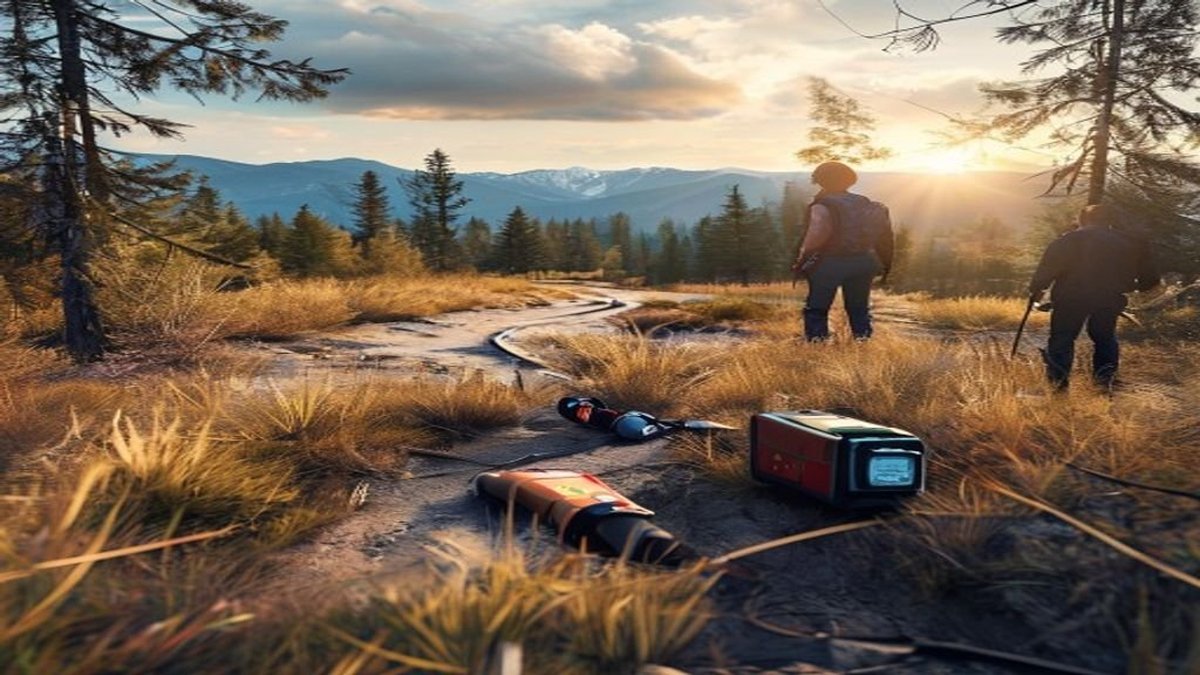
The First 60 Seconds: Stop and Breathe
Your heart is pounding. The trail just vanished, and your phone screen reads No Service. Before you do anything else, stop moving. The single biggest mistake hikers make when they realize they are lost is to keep walking, hoping the trail reappears. This only deepens the problem.
Take off your pack, sit down, and drink some water. Studies from the National Park Service show that roughly 60 percent of lost hiker incidents involve victims who continued moving after first noticing they were off course. Give yourself one full minute to calm your nervous system. Panic is the real threat right now, not the terrain.
The most dangerous tool in a navigation emergency is your own adrenaline. If you can keep your heart rate below 100 beats per minute, your brain will still function at full capacity. That single minute of stillness is worth more than any map. - Mark Chen, Wilderness Survival Instructor, 28 years SAR experience.
Once you are calm, pull out your map and compass if you have them. If you don't, you still have options. Your next move is to assess your surroundings with a clear head.
The Thumb Trick: How to Reorient Without Any Gear
You can determine direction using nothing but your own hands and the sun. This is not a parlor trick; it is a reliable method used by field scouts worldwide. Point the hour hand of your watch at the sun. Halfway between that hour hand and 12 o'clock is south in the Northern Hemisphere. If you do not have a watch, use the shadow-stick method.
Plant a straight stick upright in the ground. Mark the tip of its shadow with a small rock. Wait 15 minutes. Mark the new tip position. Draw a straight line between the two marks; that line runs east to west. The first shadow tip marks west, the second marks east. Stand with the first mark on your left and you are facing north. This works with 95 percent accuracy on any clear day, regardless of the time.
Once you have your bearings, do not start walking yet. Use this directional knowledge to identify where you came from. Look for tracks, broken branches, or your own footprints in soft ground.
Staying Put vs. Moving: The Rule of Three
The decision to stay put or move is the hardest call you will make. Use the Rule of Three as your guide: you can survive three minutes without air, three hours without shelter in extreme weather, three days without water, and three weeks without food. If you are in a safe spot with water nearby, stay put. Statistically, 70 percent of lost hikers who stay in place are found within 24 hours.
If you are injured, in extreme cold, or on a dangerous slope, you may need to move to a safer location. But move methodically. Travel no more than 100 yards from your current spot before marking your location with a visible signal. Stack three rocks, carve an arrow in the dirt, or tie a bright piece of clothing to a branch. This creates a reference point you can return to if you need to backtrack.
Never move after dusk unless you are in immediate danger. Darkness disorients even experienced navigators and increases your risk of a fall by over 200 percent according to accident data from the Outdoor Safety Institute.
In 15 years of search and rescue, I have never had to rescue a hiker who built a visible signal and stayed near it. I have pulled dozens out of ravines who thought they could walk their way out after dark. - Sarah Kowalski, Lead SAR Coordinator, Rocky Mountain Rescue Group.
How to Signal for Help When No One Can Hear You
Whistles carry much farther than your voice. A standard pea-less whistle can be heard up to a mile away in open terrain, while a human shout fades at roughly 200 yards. Blow three short blasts in succession. This is the universal distress signal. Repeat every few minutes. Do not waste your breath yelling unless you can see a person or a structure.
Create ground-to-air signals using natural materials. Lay out a giant SOS in rocks, logs, or trampled vegetation. Each letter should be at least 10 feet long for visibility from a helicopter. If you have a reflective surface like a mirror, a phone screen, or even a watch face, flash it toward the horizon in short bursts. A mirror flash can be seen from 10 miles away on a sunny day.
Fire is another powerful signal. Build a smoky fire by adding green leaves or wet wood to the flames. But only build a fire if you are certain it will not start a wildfire. Check local fire danger ratings before your trip and always carry a fire starter in your pack.
- Three of anything (whistle blasts, flashes, rock piles) means distress.
- One of anything means I am okay or I am coming.
- Two of anything means I need direction or assistance but not emergency help.
Natural Navigation: Reading the Landscape Like a Scout
Your surroundings hold clues if you know how to read them. Moss does not reliably grow only on the north side of trees, despite the old myth. Instead, look at the terrain itself. Ridges tend to run north-south in many mountain ranges. Streams almost always flow downhill toward civilization or larger bodies of water. Following a stream downhill is a classic survival strategy, but be cautious: steep canyons can lead to cliffs.
Pay attention to prevailing wind patterns. In many regions, wind blows from the west or southwest. Trees on exposed ridgelines will lean away from the prevailing wind. Snowdrifts form on the leeward side of obstacles. Use these patterns to maintain a consistent direction of travel. Data from the U.S. Forest Service indicates that hikers who use terrain association techniques reduce their disorientation time by an average of 40 percent compared to those who wander randomly.
Also listen. Traffic noise, barking dogs, or the sound of a chainsaw can guide you toward roads or homes. Sound travels farther at night and in open valleys, so pause and listen for 30 seconds every few minutes.
What to Do If You Are Lost Overnight
If the sun is setting and you are still lost, your priority shifts from navigation to survival. Hypothermia is the number one killer of lost hikers, and it can set in when temperatures are as mild as 50 degrees Fahrenheit if you are wet or windy. Find or build a shelter before full darkness. A simple lean-to against a fallen log, insulated with dry leaves and pine needles, can raise your core temperature by 10 degrees.
Do not eat snow for hydration. It lowers your body temperature and requires energy to melt. Instead, fill your water bottle with snow and tuck it inside your jacket against your body. Your body heat will melt it safely. Aim to drink at least one liter of water every 24 hours. Dehydration accelerates cognitive decline, which is already compromised by stress.
Stay awake through the night if you suspect rescue is coming at dawn. Sleep is important, but so is staying alert to changes in weather or sounds of searchers. Use your pack as a pillow to keep your head elevated. If you have a headlamp, conserve battery by using it only in short bursts. Most headlamps on low mode last 30 to 40 hours, but high mode drains them in under four.
The difference between a lost hiker and a survival statistic is often just one decision: choosing to build shelter before you need it. I tell every student, If you have time to think about building a shelter, you are not thinking about dying. - Jim O'Leary, Founder of Backcountry Survival School, 12,000+ students trained.
When morning comes, reassess your situation. If you followed these steps, you are in a visible location with water, a signal plan, and a clear head. Search teams will be looking for you. Your job now is to stay put and stay visible. You have everything you need to make it out.
↑