Table of Contents
Complete Yellowstone National Park guide covering best hikes, geyser viewing tips, wildlife watching locations, camping, and seasonal recommendations.
Jordan Myers
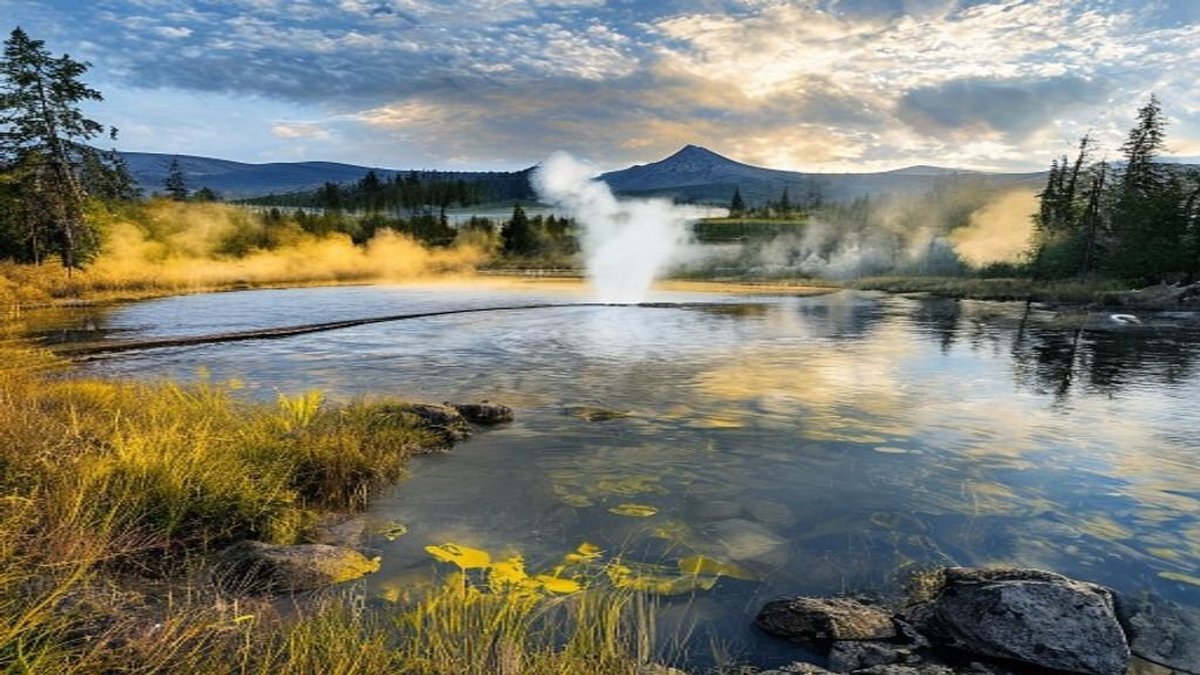
Complete Yellowstone National Park guide covering best hikes, geyser viewing tips, wildlife watching locations, camping, and seasonal recommendations.
Complete Yellowstone National Park guide covering best hikes, geyser viewing tips, wildlife watching locations, camping, and seasonal recommendations.
Yellowstone National Park was established in 1872 as the first national park in the world, spanning 2.2 million acres across Wyoming, Montana, and Idaho. The park sits atop one of the largest active volcanic systems on Earth, creating the geothermal features that make Yellowstone unique. With over 500 geysers, 10,000 thermal features, and the largest concentration of wildlife in the lower 48 states, Yellowstone offers an unparalleled outdoor experience.
The park receives over 4 million visitors annually, with peak season from July through August. Planning your visit strategically helps you avoid the worst crowds while experiencing the park's highlights. Understanding the park's five distinct regions the geyser basins, the Grand Canyon of the Yellowstone, Lamar Valley, Hayden Valley, and Yellowstone Lake helps you structure your itinerary for maximum impact.
Yellowstone is not a park you visit once and check off a list. It is a place that reveals itself slowly, rewarding those who return with new experiences each time. The same trail in different seasons, different weather, or different light feels like an entirely new place.
Yellowstone offers hiking experiences ranging from accessible boardwalks to backcountry wilderness treks. The boardwalks around Old Faithful and the Upper Geyser Basin provide an easy 1.5-mile loop offering views of the largest concentration of geysers in the world. The Grand Prismatic Spring Overlook trail, a moderate 1.5-mile round trip, provides the iconic aerial view of the park's largest hot spring.
For longer hikes, the Fairy Falls Trail (4.5 miles round trip) leads to one of Yellowstone's most beautiful waterfalls. The Mount Washburn Trail (6.2 miles round trip) offers panoramic views from the park's central peak and excellent wildflower displays in July. The South Rim Trail along the Grand Canyon of the Yellowstone provides spectacular canyon views from Artist Point and Uncle Tom's Trail.
Old Faithful is Yellowstone's most famous geyser, erupting approximately every 60-110 minutes. Check the visitor center for predicted eruption times, which are updated throughout the day. Arrive 15-20 minutes early to secure a good viewing position. For a less crowded experience, visit the Upper Geyser Basin boardwalks during early morning or evening hours when most visitors are at Old Faithful.
Beyond Old Faithful, Norris Geyser Basin offers Steamboat Geyser, the world's tallest active geyser with eruptions reaching over 300 feet. The Midway Geyser Basin features Grand Prismatic Spring, the largest hot spring in the United States. The Mammoth Hot Springs terraces offer a completely different geothermal experience with cascading travertine formations.
Yellowstone offers the best wildlife viewing in the lower 48 states. The Lamar Valley, known as America's Serengeti, provides the most reliable wolf viewing in the world. Hayden Valley offers exceptional bison and bear viewing, particularly during early morning and evening hours. Carry binoculars or a spotting scope for distant wildlife.
Bison are everywhere in Yellowstone and can be dangerous despite their docile appearance. Maintain at least 25 yards of distance from bison and elk, and at least 100 yards from bears and wolves. If an animal changes its behavior due to your presence, you are too close. Bear spray is essential for any hike in Yellowstone, and knowing how to use it is equally important.
Each season offers a dramatically different Yellowstone experience. Summer (July-August) provides full access to all park areas but brings crowds and requires advance reservations. Spring (May-June) offers newborn wildlife, fewer crowds, and roaring waterfalls from snowmelt, though some roads remain closed. Fall (September-October) provides elk rut activity, fewer visitors, and stunning autumn colors.
Winter (November-April) transforms Yellowstone into a snowy wilderness accessible only by snowmobile or snowcoach. Winter visitors experience steaming geysers in subzero temperatures, wolf tracking in deep snow, and an intimate park experience with minimal crowds. Winter access requires specialized transportation and cold-weather gear but rewards with unforgettable experiences.
For serious backcountry exploration, the Bechler River region in Yellowstone's southwest corner offers a true wilderness experience with 30+ waterfalls accessible via the Bechler River Trail (18 miles one way to Three River Junction). This area requires a backcountry permit obtained through the park's online reservation system, which opens April 1 for the upcoming summer season. The Cascade Corner, as it's known, sees less than 5% of park visitors despite containing some of the most dramatic waterfall scenery in the Rockies. Hikers should carry a reliable water filter like the Katadyn Be Free 1.0L system, as stream crossings are frequent and giardia is present in all surface water throughout the park.
The Mount Sheridan Trail (13.4 miles round trip with 4,100 feet of elevation gain) from the Heart Lake trailhead provides one of the park's most rewarding summit experiences, offering panoramic views of the Tetons and Yellowstone Lake from the 10,308-foot summit. This strenuous day hike requires an early start by 6:00 AM during summer months to avoid afternoon thunderstorms that frequently develop over the Absaroka Range. Trail runners and day hikers should carry a minimum of three liters of water and electrolyte tablets, as the southern exposure on the switchbacks above Heart Lake offers no shade until reaching the tree line at approximately 9,500 feet. The trail is typically snow-free from mid-July through September, with peak wildflower displays along the lower sections during early August.
Effective wildlife viewing in Lamar Valley requires specific timing and equipment strategies beyond simply showing up with binoculars. Professional wildlife photographers and guides recommend arriving at the Lamar Valley pullouts by 5:30 AM during June and July, when wolves are most active after hunting through the night and before the heat drives them into cover. A quality spotting scope with at least 60x magnification, such as the Vortex Razor HD 27-60x 85, allows observers to identify individual wolves in the Druid Peak pack from the designated pullouts without disturbing their natural behavior. The Yellowstone Wolf Tracker program, operated by the Yellowstone Forever Institute, offers guided van tours that use radio telemetry equipment to locate packs, providing a 90% success rate for wolf sightings during the spring denning season from April through June.
For the Grand Canyon of the Yellowstone, the North Rim Trail (3.5 miles one way from the North Rim Trailhead to Inspiration Point) offers a less crowded alternative to the South Rim while providing equally dramatic views of the 308-foot Lower Falls. The trail passes directly above the canyon rim at multiple points, requiring careful footing on the gravel surface, especially when wet from morning dew or afternoon rain showers common from June through August. Hikers should wear sturdy boots with aggressive tread patterns, such as the Salomon X Ultra 4 Mid GTX, to maintain traction on the exposed sections where the trail narrows to less than three feet in width. The best photographic light for the canyon occurs between 10:00 AM and 2:00 PM during summer, when the sun is directly overhead and illuminates the yellow and orange rhyolite rock formations that give the canyon its name.
For a moderate day hike that showcases Yellowstone's thermal features, the 4.8-mile loop around the West Thumb Geyser Basin offers boardwalk trails passing the Abyss Pool and Fishing Cone, with the best light for photography occurring during the golden hour just after sunrise when steam rises dramatically against the cool morning air.
When approaching the Grand Prismatic Spring, arrive before 9 a. m. to avoid crowds and capture the full rainbow spectrum from the newly renovated Fairy Falls Trail overlook, where a 1.6-mile uphill climb rewards you with a top-down view that no ground-level photo can match, especially when using a polarizing filter to cut glare.
For prime wildlife viewing in the Lamar Valley, bring a pair of Swarovski EL 10x 42 binoculars and a telephoto lens of at least 400mm to safely observe bison herds grazing along the Lamar River at dawn, while keeping a respectful 100-yard distance from wolves and bears that frequent the Soda Butte Creek area during May and June.
Maintaining appropriate distance from wildlife protects both you and the animals. Use the rule of thumb: if the animal changes its behavior because of your presence, you are too close. Signs of stress include a raised head, flattened ears, tail position changes, and vocalizations. For large mammals like bears and moose, maintain at least 100 yards of distance. For smaller animals like foxes and deer, 25 yards provides adequate space for both observation and safety.
Wildlife photography should never come at the expense of the subject well-being. Use a telephoto lens of at least 300mm to capture detailed images from a safe distance. Never feed, call, or harass animals to get a better shot. Avoid using flash at night, which can disorient nocturnal animals. Be especially careful around nesting sites and during mating seasons when animals are more sensitive to disturbance.
Maintaining appropriate distance from wildlife protects both you and the animals. Use the rule of thumb: if the animal changes its behavior because of your presence, you are too close. Signs of stress include a raised head, flattened ears, tail position changes, and vocalizations. For large mammals like bears and moose, maintain at least 100 yards of distance. For smaller animals like foxes and deer, 25 yards provides adequate space for both observation and safety.
Wildlife photography should never come at the expense of the subject well-being. Use a telephoto lens of at least 300mm to capture detailed images from a safe distance. Never feed, call, or harass animals to get a better shot. Avoid using flash at night, which can disorient nocturnal animals. Be especially careful around nesting sites and during mating seasons when animals are more sensitive to disturbance.