Compare hardtail, full suspension, and fat tire mountain bikes. Learn which frame type suits your riding style, terrain, and budget.
Hardtail Mountain Bikes: Lightweight and Efficient
Hardtail mountain bikes feature front suspension only with a rigid rear end. This simple design makes them lighter, more efficient climbers, and significantly more affordable than their full suspension counterparts. Hardtails excel on smooth to moderately rough trails where pedaling efficiency matters more than plush comfort. The rigid rear end transfers every watt of pedaling power directly to the rear wheel, making hardtails the preferred choice for cross-country racing and long-distance trail riding.
Modern hardtails have evolved significantly from the rigid frames of early mountain biking. Today's hardtail frames use advanced geometries with slacker head angles and longer reach measurements that provide surprising capability on technical terrain. Brands like Specialized, Trek, and Giant offer hardtail models ranging from entry-level to professional race bikes. A quality hardtail with 120-140mm of front travel can handle most trails that intermediate riders encounter.
A hardtail teaches you to be a better rider. Without rear suspension to absorb your mistakes, you learn to choose better lines, stay light on the bike, and use your body as suspension. Those skills carry over to any bike you ride afterward.
Who Should Choose a Hardtail
Hardtails are ideal for riders on a budget, cross-country racers, and anyone who prioritizes climbing efficiency over descending plushness. They require less maintenance than full suspension bikes since there are fewer pivot points and no rear shock to service. For riders primarily tackling flow trails, gravel paths, and well-maintained singletrack, a hardtail provides all the performance needed without the weight penalty of rear suspension.
Full Suspension Mountain Bikes: Comfort and Control
Full suspension mountain bikes incorporate both front and rear suspension systems, typically offering 120-170mm of travel depending on the intended discipline. The rear suspension system uses a linkage design that compresses a shock absorber, allowing the rear wheel to track the ground independently of the frame. This design provides dramatically more traction, comfort, and control on rough terrain compared to hardtails.
The primary advantage of full suspension is traction. When the rear wheel maintains contact with the ground over roots, rocks, and bumps, you accelerate faster, corner with more confidence, and maintain control in situations that would buck a hardtail rider off balance. Modern full suspension designs have largely eliminated the pedal bob issue through sophisticated leverage curves and platform damping, making modern full suspension bikes nearly as efficient climbers as hardtails.
Full suspension is not about comfort. It is about traction. A rear wheel that stays on the ground keeps you moving forward when the trail gets rough. Comfort is a welcome side effect, but control is the real benefit.
Full Suspension Categories
Trail bikes (120-140mm travel) represent the sweet spot for most riders, offering enough suspension for aggressive descending while remaining efficient for climbing. Enduro bikes (150-170mm) prioritize descending performance and are built for the roughest terrain, often used in lift-served bike parks and enduro races. Downhill bikes (180-200mm) are designed exclusively for gravity-fed riding and are not practical for pedaling uphill.
Fat Tire Mountain Bikes: Maximum Traction
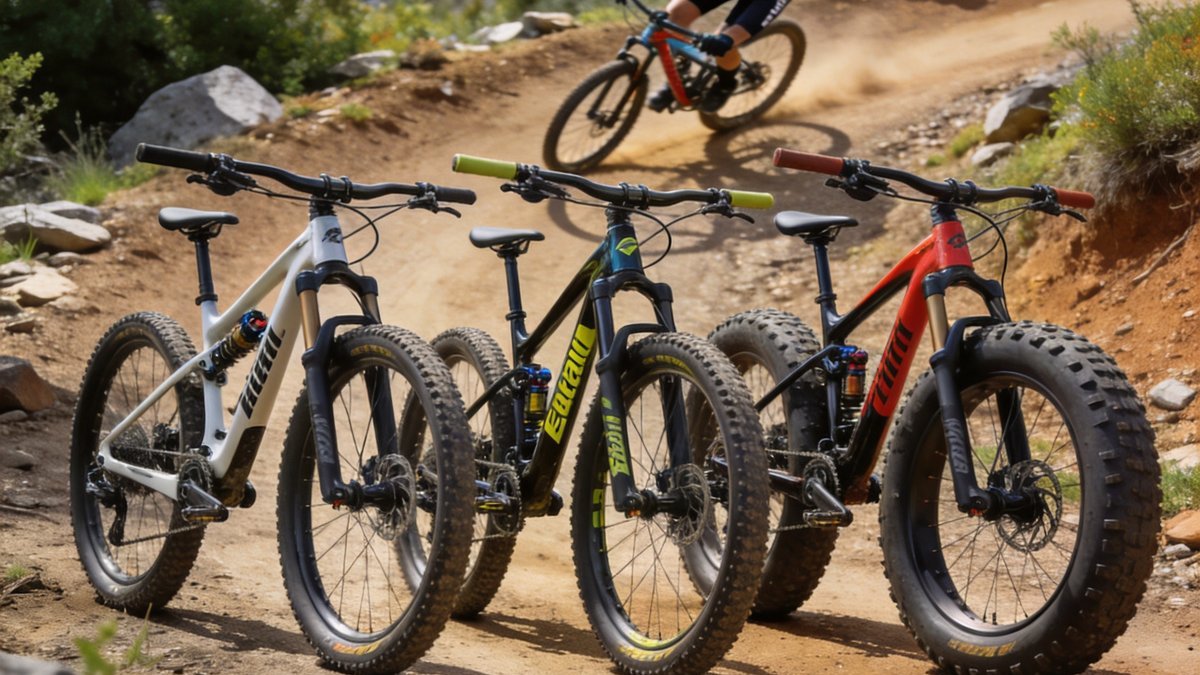
Fat tire bikes feature oversized tires typically measuring 3.8 to 5 inches wide, mounted on wide rims. These massive tires provide incredible traction and flotation on loose surfaces including sand, snow, and mud. Fat bikes originated as winter riding solutions but have found a broader audience among riders who value stability and all-season capability.
The wide tires act as natural suspension, allowing fat tire bikes to run at very low pressures (5-15 PSI) that conform to terrain. This natural damping makes fat bikes surprisingly comfortable despite typically having rigid frames or minimal suspension. The trade-off is weight and rolling resistance. Fat bikes are heavier and slower on paved surfaces and hardpack trails compared to standard mountain bikes.
When a Fat Bike Makes Sense
Fat tire bikes excel in conditions where standard mountain bike tires would sink or lose traction. Winter riders, beach cruisers, and explorers who ride on loose or unpredictable surfaces benefit most from fat bike design. Many riders in northern climates use fat bikes as their primary winter training tool, maintaining fitness when trails are buried in snow. For most trail riding, however, a hardtail or full suspension bike with standard tires provides better performance.
How to Choose the Right Bike for Your Needs
Your choice between hardtail, full suspension, and fat tire depends on three factors: your local terrain, your budget, and your riding goals. Evaluate the trails you ride most often rather than the ones you dream about riding someday. A hardtail is often the best first mountain bike because it builds fundamental skills and leaves budget for quality components. Upgrade to full suspension when your riding outgrows the hardtail's capabilities.
Budget Considerations
At the same price point, a hardtail will always have better components than a full suspension bike because less of the budget goes toward frame complexity. A $2,000 hardtail typically features a quality fork, reliable drivetrain, and hydraulic disc brakes. A $2,000 full suspension bike may use entry-level suspension that compromises both climbing and descending performance.
Test ride before you buy. Geometry and suspension feel are highly personal preferences that spec sheets cannot convey. Many bike shops offer demo programs that apply rental fees toward purchase, making it affordable to try several models before committing.
Frequently Asked Questions
Can I convert a hardtail to full suspension later?
No. Frame design determines suspension type, and conversion is not practical or cost-effective. Choose the suspension type that matches your needs from the start.
Are fat tire bikes good for beginners?
Fat tire bikes can be excellent for beginners riding on loose or unpredictable surfaces due to their stability. However, their weight and rolling resistance make them less ideal for climbing or long-distance rides.
What suspension travel do I need for trail riding?
For most trail riding, 120-140mm of front travel (and rear travel if choosing full suspension) provides an excellent balance of capability and efficiency. Beginners should err on the lower end of this range.