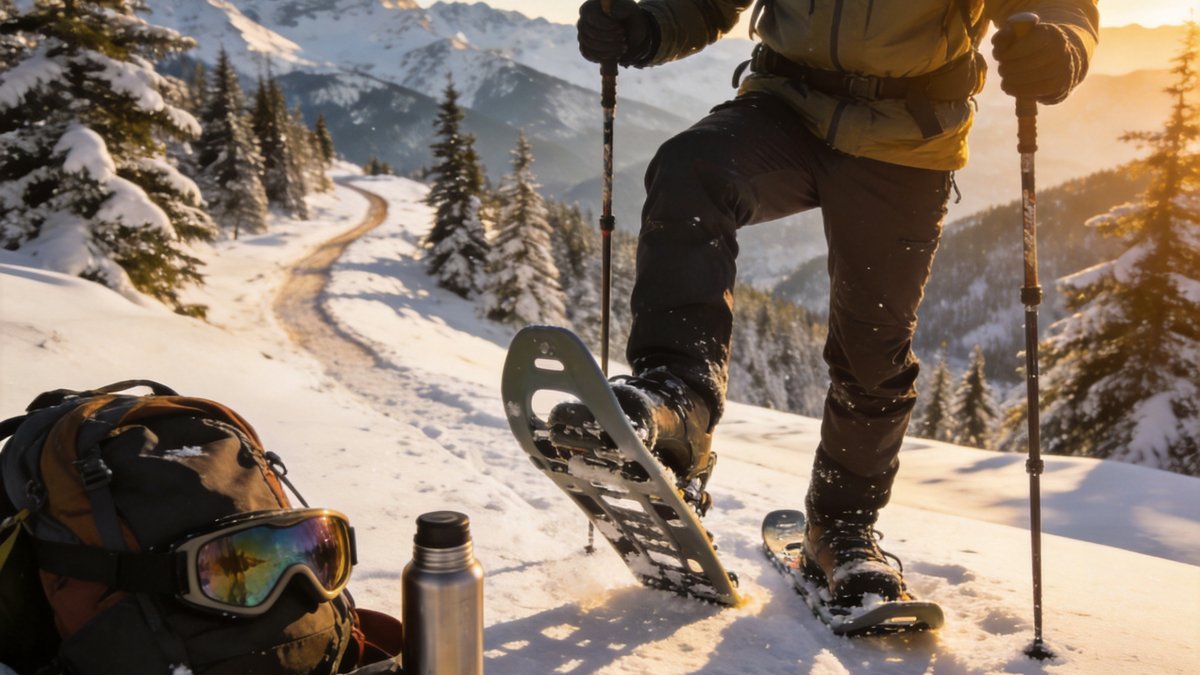
Snowshoeing is the most accessible winter sport. With minimal gear and no instruction required, you can explore snowy trails that summer hikers never see.
Key Takeaways
- Snowshoes work by distributing your weight across a larger surface area, preventing you from sinking into deep snow. Modern snowshoes are lightweight with aggressive crampons for traction.
- Snowshoeing requires no special instruction. If you can walk, you can snowshoe. The motion is identical to walking, just slightly wider due to the snowshoe width.
- Essential snowshoeing gear includes snowshoes, trekking poles, waterproof boots, and layered clothing appropriate for winter conditions.
- Snowshoeing burns 500-700 calories per hour, making it excellent winter exercise accessible to all fitness levels.
Choosing Snowshoes
Modern snowshoes are designed for specific terrain and snow conditions. Recreational snowshoes with moderate flotation and basic crampon systems work well for most beginners on gentle, packed trails. Hiking snowshoes feature more aggressive traction for steeper terrain and variable snow conditions. Backcountry snowshoes provide maximum flotation and the most aggressive crampons for deep powder and steep ascents.
Snowshoe sizing depends on your weight plus the weight of gear you carry. Lighter snowshoes 21-25 inches long work for people under 150 pounds on packed snow. Medium snowshoes 25-30 inches support 150-200 pounds. Large snowshoes 30-36 inches support over 200 pounds or deep powder conditions. Larger snowshoes provide better flotation but are more cumbersome to walk in.
Snowshoe construction has evolved significantly. Traditional wooden snowshoes with rawhide webbing are beautiful but require maintenance and perform poorly on hard snow. Modern snowshoes feature aluminum frames, synthetic decking, and steel crampons. These materials provide durability, consistent performance, and minimal maintenance. Rental snowshoes at outdoor stores and ski resorts are typically modern designs appropriate for beginners.
Essential Gear Beyond Snowshoes
Trekking poles provide stability and reduce leg fatigue on snowshoes. Poles with snow baskets prevent the pole from sinking too deep into soft snow. Adjustable poles allow you to shorten poles for climbing and lengthen them for descents. Many snowshoers use two poles, but one pole on the uphill side provides adequate stability for gentle terrain.
Winter boots for snowshoeing should be waterproof and insulated, reaching at least mid-calf height to keep snow out. Dedicated winter hiking boots with rated insulation work well. Some snowshoe bindings accommodate hiking boots while others require boots with a pronounced heel welt. Check compatibility before purchasing. Avoid snowboard or ski boots which are too stiff for comfortable walking.
Clothing for snowshoeing follows the layering principle used in all winter activities. A moisture-wicking base layer, insulating mid-layer, and waterproof shell provide appropriate warmth for most conditions. Snowshoeing generates significant body heat, so start your session slightly cool and remove layers as you warm up. Carry extra layers in your pack for rest breaks and descents.
Walking Technique
Walking in snowshoes requires a slightly wider stance than normal walking to avoid stepping on your own snowshoes. On packed trails, your natural gait works with minimal adjustment. In deep powder, lift your feet slightly higher to keep the snowshoe tips from digging into the snow. The motion remains walking, not stomping. Let the snowshoes float naturally on the snow surface.
Ascending hills on snowshoes requires attention to technique. On moderate slopes, use the snowshoe's built-in heel lift if available. This feature elevates your heel, reducing calf strain on steep pitches. On steep ascents, kick the toe of your snowshoe into the snow to create a platform, then step up using the crampons for traction. Zigzag up very steep slopes rather than climbing straight.
Descending on snowshoes feels awkward initially but becomes natural with practice. Lean back slightly to keep your weight balanced over your feet. Let your heels dig into the snow for braking. On steep descents, sit back and slide on your snowshoes as if sledding. Use trekking poles for balance and braking. Avoid running or moving faster than you feel comfortable controlling.
Snowshoeing Trails and Destinations
Beginner snowshoers should start on packed, marked trails at established Nordic centers or winter recreation areas. These locations offer groomed snowshoe trails, rentals, and trail maps. Many downhill ski resorts maintain separate snowshoe trails away from ski runs. National and state parks with winter recreation programs offer ranger-led snowshoe walks for first-time participants.
Intermediate snowshoers can explore ungroomed trails in national forests and wilderness areas. Route-finding skills become important off groomed trails because snow covers summer trail markers. Carry a map, compass, or GPS device and know how to navigate in winter conditions. Check avalanche forecasts before venturing into backcountry terrain above 30 degrees slope angle.
Advanced snowshoeing includes winter camping, multi-day tours, and summiting winter peaks. These activities require avalanche safety training, cold weather camping skills, and extended navigation abilities. Winter summit attempts require early starts, careful weather monitoring, and the willingness to turn around when conditions deteriorate. Snowshoes with aggressive crampons and heel lifts are essential for steep terrain.
Winter Safety Considerations
Hypothermia and frostbite are the primary winter hazards for snowshoers. Dress in layers and avoid cotton, which loses insulating properties when wet. Recognize early hypothermia signs including shivering, loss of coordination, and confusion. Frostbite typically affects exposed skin on cheeks, nose, fingers, and toes. Keep extremities covered and check companions for signs of cold injury.
Avalanche safety is critical for snowshoers traveling in backcountry terrain. Snowshoes provide less floatation than skis or splitboards in avalanche debris. Carry avalanche safety equipment including beacon, probe, and shovel when traveling in terrain above 30 degrees. Take an avalanche safety course before venturing into backcountry terrain. Check daily avalanche forecasts from local avalanche centers.
Daylight hours are short in winter. Start your snowshoe trip early and plan to finish before sunset. Carry a headlamp or flashlight with extra batteries even for short afternoon trips. Winter conditions including clouds and trees can create dark conditions earlier than expected. A headlamp turns an enjoyable day into a safe evening rather than an emergency.
"Snowshoeing is the magic carpet of winter sports. It transforms deep snow from an obstacle into a pathway, opening up the entire winter landscape to anyone who can walk. No lessons, no lifts, and no lift lines."
"The quiet of a snowshoe trail is unlike any other outdoor experience. Snow absorbs sound, creating a hush that amplifies the subtle sounds of winter: the creak of frozen trees, the chatter of a chickadee, the whisper of snowflakes landing on your jacket."
Frequently Asked Questions
Do I need lessons to snowshoe?
No special instruction is needed for snowshoeing on gentle terrain. If you can walk, you can snowshoe. Rental staff at outdoor stores and Nordic centers can show you how to put on snowshoes and adjust the bindings. For steep terrain and backcountry travel, avalanche safety training is essential.
Can I snowshoe on ski trails?
Snowshoeing on groomed cross-country ski trails is discouraged because snowshoes damage the groomed track surface. Most Nordic centers designate separate snowshoe trails or allow snowshoeing on the outer edges of ski trails. Check local regulations before snowshoeing on any groomed trail system.
What is the best age to start snowshoeing?
Snowshoeing is suitable for all ages from young children to seniors. Children as young as 4-5 can use appropriately sized snowshoes. Many families snowshoe together with young children using child-sized snowshoes or riding in a child carrier backpack while parents snowshoe. There is no upper age limit for snowshoeing on gentle terrain.
How far can you snowshoe in a day?
On packed trails, most recreational snowshoers comfortably cover 3-6 miles in a half day and 6-10 miles in a full day. In deep powder or steep terrain, distance reduces significantly to 1-3 miles per day. Experienced snowshoers covering easy terrain can reach 12-15 miles in a full day with good fitness and conditions.