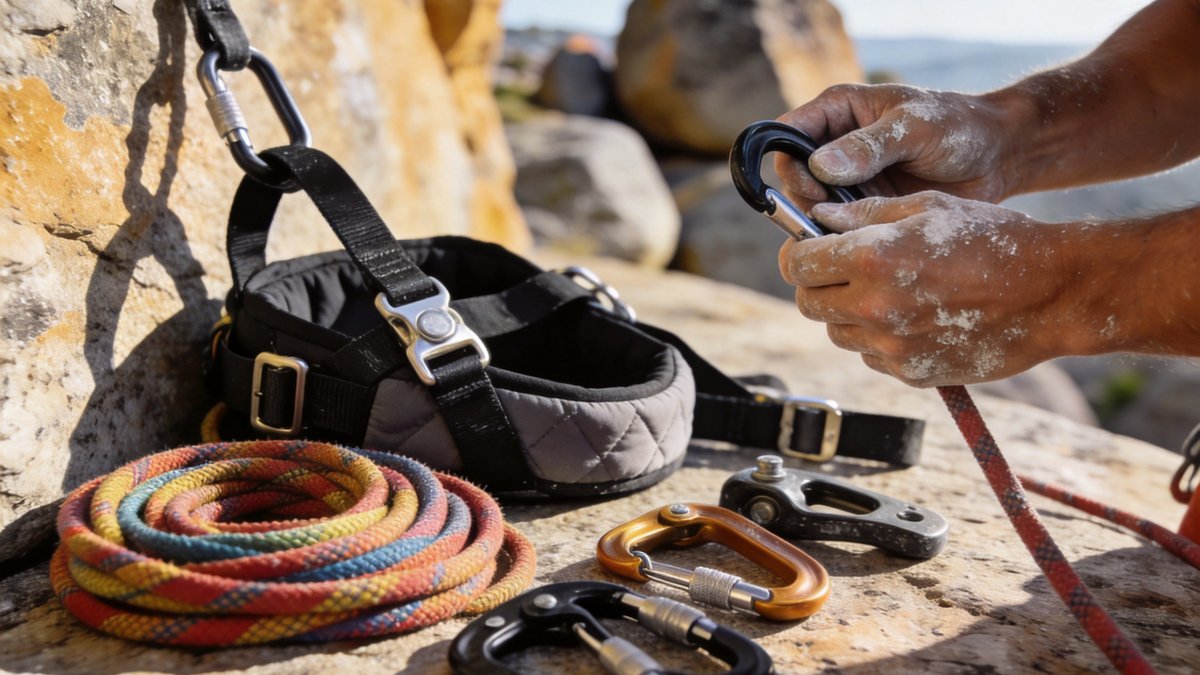
Choosing the right climbing gear is about balancing safety, weight, and cost. Understanding each piece of equipment helps you build a reliable rack for any climbing objective.
Key Takeaways
- Your climbing rope is your most important safety tool. Dynamic ropes stretch to absorb fall forces and come in different diameters and lengths for specific disciplines.
- A well-fitting harness that distributes weight comfortably is worth investing in. Try multiple brands and styles before purchasing.
- Climbing protection divides into active cams and passive nuts. Each works best in specific rock features and crack sizes.
- Never buy used climbing gear unless you personally know the history. Soft goods including ropes, harnesses, and slings have limited lifespans.
Ropes: The Heart of Your Safety System
Dynamic climbing ropes are engineered to stretch under load, absorbing the energy of a fall and reducing impact forces on the climber and anchor. Rope diameter and length determine suitability for different climbing types. Most sport climbers use ropes 9.4-10.2 millimeters thick and 60-70 meters long. Thinner ropes are lighter but wear faster and require more careful handling.
Rope construction comes in two types: single ropes for most sport and trad climbing, and half or twin ropes for alpine and trad routes requiring rope management around corners. Single ropes offer simplicity and durability. Half ropes provide redundancy and allow longer rappels. Twin ropes require both strands to be clipped together into each piece of protection.
Rope care significantly extends lifespan. Keep ropes clean and dry, store them loosely coiled away from direct sunlight, and avoid stepping on them which grinds dirt into the sheath. Retire ropes after a serious fall generating significant force, if core shots expose the inner fibers, or after 2-5 years of regular use. Inspect ropes before every climbing day.
Harnesses: Comfort and Safety Combined
A climbing harness transfers fall forces from the rope across your pelvis and legs. A well-designed harness provides comfort while hanging, convenient gear loops for racking equipment, and adjustable leg loops for different clothing layers. Harnesses designed for sport climbing emphasize lightweight and mobility. Trad and alpine harnesses prioritize comfort for long days and hanging belays.
Harness fit is critical for safety and comfort. The waist belt should sit above your hip bones and remain comfortable when weighted. Adjustable leg loops accommodate changing layers between seasons. Gear loops should be positioned for easy access without interfering with movement. A haul loop on the back provides attachment for gear slings or haul bags.
Harness lifespan depends on usage frequency and conditions. Inspect webbing for fraying, cuts, or chemical damage before every use. Retire harnesses after 7-10 years regardless of visible condition, as UV exposure degrades nylon over time. Harnesses involved in serious falls should be retired immediately. Store harnesses away from direct sunlight and chemicals.
Protection: Cams, Nuts, and Quickdraws
Spring-loaded camming devices are the most versatile and widely used active protection for trad climbing. Cams consist of four curved lobes that expand against rock surfaces when loaded. Each cam size fits a specific crack width range. A standard rack includes cams from 0.3 to 4 inches, with smaller and larger sizes for specialized needs. Cams are quick to place but require clean rock without loose features.
Nuts and stoppers are passive protection that wedge into constrictions in cracks. They are lighter and cheaper than cams and work well in granite and quartzite with parallel-sided cracks. Nuts require more skill to place properly but offer reliable protection in the right features. A set of nuts covers crack sizes from 1 to 13 millimeters and costs significantly less than a set of cams.
Quickdraws connect the rope to protection points during lead climbing. Each quickdraw consists of two carabiners connected by a nylon or Dyneema sling. The stiffer end clips to the bolt or gear while the bent-gate end accepts the rope. Sport climbers typically carry 12-18 quickdraws for most routes. Trad climbers carry fewer quickdraws plus alpine draws which have longer slings to reduce rope drag.
Helmets and Head Protection
Climbing helmets protect against two distinct hazards: falling rock or gear from above and impact from falling onto a ledge or the wall. Modern climbing helmets are lightweight, well-ventilated, and compatible with headlamps for alpine starts. A helmet should fit snugly without pressure points and remain secure during head movement. Most helmets weigh between 6 and 12 ounces.
Helmet construction comes in two main types. Hard-shell helmets with foam liners offer the best impact protection and durability. Foam-only helmets are lighter and more comfortable but less durable against repeated impacts. Both types meet safety standards when certified by UIAA or CE. Choose based on your climbing style: hard-shell for alpine and trad, foam for sport and gym.
Replace helmets after any significant impact, even if no visible damage exists. The foam compresses during impact and cannot protect from subsequent hits. UV exposure degrades helmet materials over time. Replace helmets every 5-7 years regardless of visible condition. Store helmets away from extreme temperatures and direct sunlight.
Building Your Personal Rack
A basic sport climbing rack includes a rope, harness, helmet, belay device, 12-18 quickdraws, and a personal anchor system. This setup allows you to climb most sport routes up to 30 meters. Add a set of nuts, six to eight cams ranging from 0.5 to 3 inches, and alpine draws to transition to trad climbing. The total investment for a complete rack ranges from $1,500 for sport to $3,000-plus for comprehensive trad.
Build your rack gradually as your skills and objectives evolve. Start with the essentials for gym climbing: shoes, harness, chalk bag, and belay device. Add outdoor gear as you progress to outdoor climbing. Buy protection pieces as you need specific sizes for routes you plan to climb. Borrow or rent unusual sizes until you confirm they suit your local climbing style.
Organize your gear for efficient climbing. Rack cams on carabiners in size order with larger pieces on one side of your gear loops. Clip nuts to a separate carabiner in size order. Quickdraws and alpine draws clip to your gear loops for easy access. A well-organized rack speeds up climbing, reduces frustration, and improves safety by making the right size instantly available when you need it.
"Buy the best climbing rope you can afford. A good rope is your lifeline, and the difference between a rope that handles well and one that kinks and tangles affects your entire climbing experience. It is the one piece of gear where spending more almost always pays off."
"A complete trad rack is built one piece at a time, not purchased all at once. Buy a few cam sizes based on the routes you plan to climb. A rack that matches your local crag typical crack sizes is more useful than a complete set that includes sizes you rarely place."
Frequently Asked Questions
How often should I replace my climbing rope?
Replace your rope after a hard fall generating significant force, if core shots expose inner fibers, or every 2-3 years with regular weekend use. Gym ropes used multiple times weekly need replacement every 6-12 months. Ropes stored properly in cool, dark conditions last longer than ropes exposed to sun and dirt.
Can I use climbing gear beyond its rated lifespan?
No. Climbing gear has finite lifespans due to material degradation from UV exposure, chemical contamination, and wear. Soft goods including ropes, harnesses, and slings should be retired after 7-10 years maximum regardless of visible condition. Hard goods including carabiners, cams, and belay devices last longer but require regular inspection.
What is the difference between a locking and non-locking carabiner?
Locking carabiners have a threaded or twist-lock sleeve that prevents the gate from opening accidentally. Use locking carabiners for critical connections including belay devices, anchor building, and attaching to harness tie-in points. Non-locking carabiners are appropriate for quickdraws, gear racking, and non-critical connections where quick clipping is important.
How do I know if my gear is safe after a fall?
After any significant fall, inspect all loaded gear carefully. Look for visible damage including cracks, deformation, fraying, or unusual wear. Ropes should be checked for core shots along the entire length impacted by the fall. Carabiners should be checked for gate distortion. When in doubt, retire the gear. The cost of replacement is trivial compared to the risk of failure.