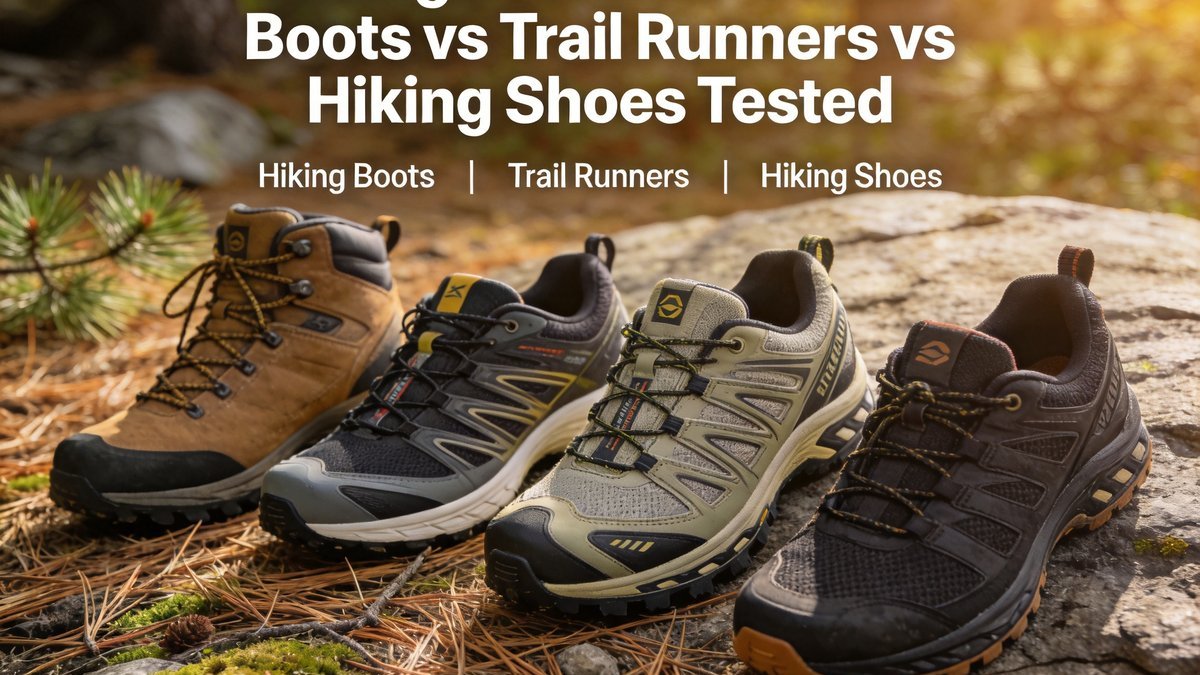
Your choice of hiking footwear affects every step of your outdoor experience. The right footwear provides comfort, support, and traction while preventing blisters and injuries. We tested 15 pairs of hiking footwear across three categories to help you make the right choice.
Key Takeaways
- Boots offer maximum ankle support for heavy packs and rough terrain but weigh 2-4 pounds per pair.
- Trail runners weigh under 2 pounds, dry faster, and cause fewer blisters but lack support for heavy loads.
- Hiking shoes split the difference: lighter than boots, more supportive than trail runners. Best for day hikes.
- Fit matters most. Try shoes with hiking socks at the end of the day when feet are slightly swollen.
Hiking Boots: Maximum Support
Traditional hiking boots provide the highest level of ankle support, foot protection, and durability. A quality boot features a high-top design that supports the ankle on uneven terrain, reducing sprain risk when carrying 30+ pound packs. Full-grain leather or synthetic uppers protect feet from rocks and roots. A stiff midsole distributes pressure evenly. GORE-TEX membranes keep feet dry. Boots weigh 2 to 4 pounds per pair and require a break-in period of 20 to 50 miles. Modern boots like the Merrell Moab 3 have reduced break-in requirements while maintaining traditional boot benefits.
Trail Runners: Lightweight and Fast
Trail runners have transformed hiking footwear for fast-paced hikers. These low-top shoes weigh under 2 pounds per pair, significantly reducing energy cost. A pound on your feet equals approximately 5 pounds on your back in energy expenditure. Trail runners dry much faster after stream crossings. Models like the Hoka Speedgoat 5 offer plush cushioning that maintains comfort over rocky terrain. Trail runners lack ankle support and wear out faster, typically lasting 300 to 500 miles.
Hiking Shoes: The Middle Ground
Hiking shoes bridge the gap between boots and trail runners. These mid-height or low-top shoes feature more structure than trail runners but less weight than boots. The Salomon X Ultra 4 GTX exemplifies the category with lightweight construction and excellent grip. Hiking shoes appeal to day hikers who want boot-like protection without boot weight and backpackers carrying moderate loads on maintained trails.
Fitting Tips
Try footwear at the end of the day when feet are swollen. Allow a thumb-width of space between your longest toe and the shoe end. The heel should fit snugly without slipping. Break in new footwear gradually: wear around the house, then short walks, then short hikes. Apply blister prevention to known hot spots before they develop.
| Footwear | Type | Weight (pair) | Best For | Pros | Cons |
|---|---|---|---|---|---|
| Merrell Moab 3 | Boot | 2 lb 10 oz | Day hikes, light backpacking | Comfortable out of box | Heavy for long distances |
| Keen Targhee III | Boot | 2 lb 8 oz | Wet conditions, wide feet | Waterproof, roomy toe box | Stiff break-in period |
| Salomon X Ultra 4 GTX | Shoe | 1 lb 14 oz | Fast hiking, moderate terrain | Lightweight, excellent traction | Narrow fit |
| Hoka Speedgoat 5 | Trail runner | 1 lb 8 oz | Ultralight hiking | Excellent cushioning | Less durable |
| Altra Lone Peak 7 | Trail runner | 1 lb 10 oz | Thru-hiking, wide feet | Zero drop, roomy toe box | Minimal ankle support |
| La Sportiva Nucleo II | Boot | 3 lb 0 oz | Technical terrain, heavy packs | Excellent support | Expensive, requires break-in |
The boots versus trail runners debate misses the point: neither is universally better. A 200-pound hiker carrying a 40-pound pack on rugged terrain needs boots. A 140-pound hiker carrying 15 pounds on maintained trails will enjoy trail runners more.
There is no such thing as a waterproof shoe that also breathes perfectly. GORE-TEX represents a compromise. In warm conditions, your feet will get wet from sweat regardless. Choose based on your primary conditions.
Sock Layering and Foot Care
Your sock system matters as much as your boots. A two-layer system consisting of thin liner socks under cushioned hiking socks prevents blisters effectively. The liner wicks moisture away from skin and reduces friction between foot and outer sock. Merino wool blend socks offer the best combination of moisture management, temperature regulation, and odor resistance. Avoid cotton socks at all costs in hiking footwear. Cotton retains moisture, loses insulation when wet, and dramatically increases blister risk by softening skin and increasing friction.
Foot care during a hike prevents problems before they develop. Stop at the first sensation of a hot spot and apply a blister bandage immediately. A small piece of moleskin or leukotape applied proactively prevents blisters from forming. Keep feet dry by changing socks during lunch breaks and airing feet at every rest stop over 10 minutes. At camp, elevate feet for 15-20 minutes and massage tired muscles. Apply foot powder before sleeping to reduce nighttime moisture. These practices turn a miserable, foot-sore hike into a comfortable experience, especially on multi-day trips where small issues compound quickly.
Waterproofing and Care for Hiking Footwear
Waterproof hiking boots require regular care to maintain their performance. Clean boots after each trip by brushing off dirt and rinsing with water. Dry them slowly at room temperature away from direct heat sources. Never use a campfire, heater, or direct sunlight to dry boots, as high heat damages adhesives, membranes, and leather. Stuff boots with newspaper to absorb moisture from the inside, changing the paper every few hours. For GORE-TEX boots, the waterproof membrane remains effective indefinitely, but the outer DWR coating wears off and needs periodic renewal.
Apply DWR spray or wash-in treatment to the boot upper when water stops beading and begins soaking into the fabric. Nikwax and Grangers offer effective treatments for both fabric and leather boots. For full-grain leather boots, apply leather conditioner every 3-4 trips to keep leather supple and prevent cracking. Replace laces when they fray to maintain even tension across the foot. A broken lace on the trail can cause serious fit issues. Check sole condition after every season: if the tread lugs are worn smooth or the sole separates from the upper at the toe, it is time for replacement or resoling.
Breaking in New Hiking Boots
Proper break-in prevents blisters and discomfort on the trail. Start by wearing your new boots around the house for several hours to identify pressure points. Progress to short walks of 1-2 miles on paved surfaces, then increase to 3-5 mile hikes on gentle trails before attempting a full day hike. The break-in process typically takes 20 to 40 miles of cumulative walking for leather boots. Fabric and synthetic boots require minimal break-in, usually 5-10 miles, but still benefit from gradual wear to allow your feet to adapt to the boot shape and identify any fit issues before a long trip.
Watch for hot spots during break-in. A hot spot that appears consistently in the same location indicates a fit problem that will not resolve with more break-in. Boots should feel snug in the heel with no lift, have enough room in the toe box to wiggle toes, and provide arch support that matches your foot shape. If you develop blisters during break-in despite proper sock layering, the boots may be the wrong size or shape for your feet. Many outdoor retailers offer a satisfaction guarantee that allows returning boots after a trial period, providing peace of mind for this critical piece of gear.
Frequently Asked Questions
Should I buy waterproof hiking shoes?
Choose waterproof if you primarily hike in wet climates or snow. Choose non-waterproof for summer hiking or desert conditions where breathability matters more.
How often should I replace hiking footwear?
Boots typically last 500 to 1,000 miles. Trail runners last 300 to 500 miles. Replace when lugs are worn smooth or the midsole feels flat.
Can I use running shoes for hiking?
Road running shoes lack the traction and foot protection needed for trails. They become dangerous on loose or rocky terrain. Use trail running shoes instead.
How do I prevent blisters?
Wear liner socks under cushioned hiking socks. Apply anti-chafe balm to hot spots. Stop at the first sign of a hot spot and apply a blister bandage immediately.