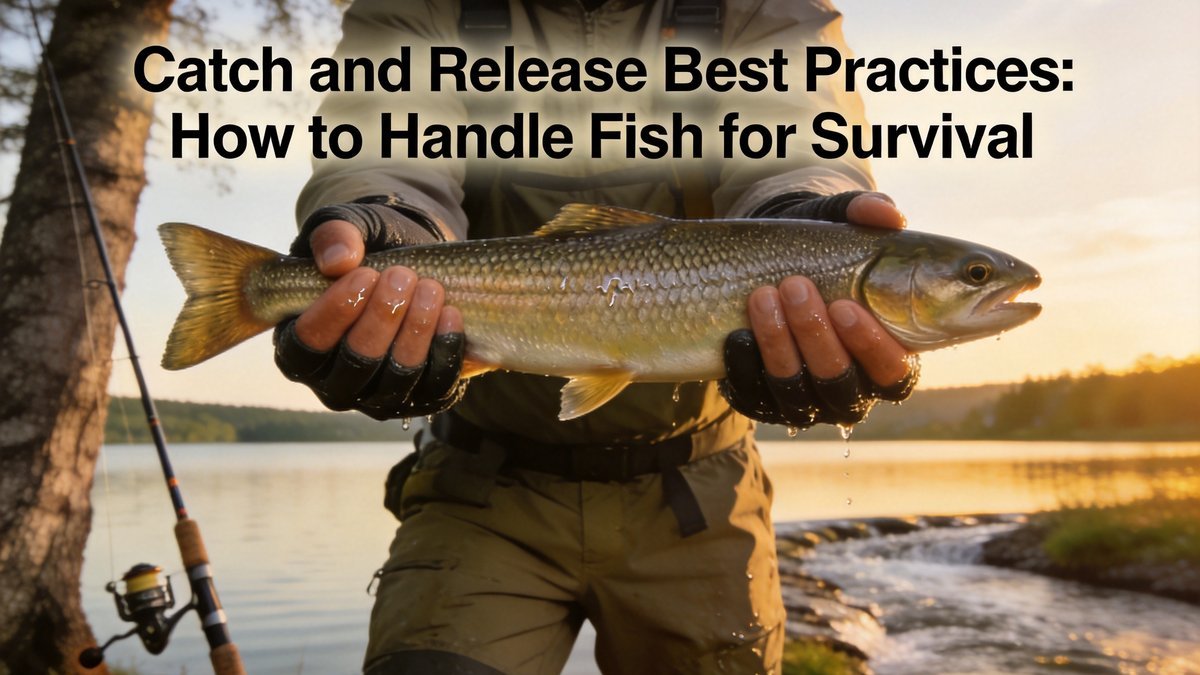
Catch and release fishing has become a cornerstone of modern angling ethics. Releasing fish properly ensures they survive to reproduce, maintaining healthy fish populations. However, catch and release only works when done correctly. Improper handling causes stress, injury, and mortality that defeats the purpose.
Key Takeaways
- Minimize air exposure. Fish should be out of water for less than 10 seconds.
- Wet your hands before touching fish. Dry hands remove the protective slime coat.
- Use circle hooks when bait fishing. They reduce deep hooking and improve survival rates.
- Revive fish before release. Hold them upright in the water facing into the current until they swim away.
Hook Selection and Removal
Circle hooks consistently hook fish in the corner of the mouth, reducing deep hooking. When a fish takes a baited circle hook, simply reel and lift steadily. Barbless hooks cause less tissue damage. For deep-hooked fish, cut the leader rather than digging for the hook. Studies show hooks left in place cause less damage than aggressive removal attempts. Use needle-nose pliers, grasping the hook firmly and backing it out along its entry path.
Proper Fish Handling
Always wet your hands before touching fish. The slime coat protects against infection and disease. Support fish horizontally with one hand under the belly and the other near the tail. Never hold fish vertically by the jaw or gills. Avoid touching gills or eyes. Use a rubber-mesh landing net rather than nylon mesh which removes slime. Keep fish in the water as much as possible during unhooking.
Revival and Release Procedures
After unhooking, hold the fish upright in the water facing into the current. Support under the belly until it recovers balance. Release when the fish actively swims away. Fish that dart away have the highest survival rates. Those lingering near the release point have lower chances. Take extra time reviving fish caught in warm water where oxygen is lower. In very warm conditions over 80 degrees, consider not fishing at all.
Environmental Considerations
Use non-toxic alternatives to lead weights like steel, tin, or tungsten. Avoid fishing during spawning seasons when fish are more vulnerable. Dispose of fishing line properly at recycling bins. Pack out all trash including bait containers and packaging. Every choice you make as an angler affects the environment your fish live in.
Every fish you release is a gamble. Wet hands, minimal air exposure, proper support, and thorough revival determine whether your catch lives to spawn again.
A photo is not worth the fish's life. Have your camera ready before lifting the fish from water. Take one photo in under ten seconds, then return and revive properly.
Species-Specific Handling Guidelines
Different fish species require different handling approaches. Trout have a delicate protective slime coat easily damaged by dry hands, nets, or rough surfaces. Always wet hands thoroughly before handling trout and use rubber-mesh nets exclusively. Bass are more durable but still require care when lipping. Support larger bass horizontally with one hand under the belly rather than hanging them vertically by the jaw, which can damage jaw structure and internal organs. Pike and musky have sharp teeth requiring long pliers or jaw spreaders for safe hook removal.
Catfish have stiff spines that can lock and cause painful puncture wounds. Grip them firmly behind the pectoral fins. Saltwater species like bonefish and permit are particularly sensitive to handling stress. Keep them in the water at all times and revive thoroughly before release. For all species, avoid touching the gills or eyes. Use barbless hooks when possible to minimize handling time. If you fish with treble hooks, consider pinching barbs or replacing with single hooks. Every second a fish spends out of water reduces its survival chances.
Photography Best Practices for Catch and Release
A quick photo should not compromise the fish's survival. Prepare your camera before lifting the fish from water: set focus, adjust settings, and compose the shot. Lift the fish only when ready to shoot. Keep the fish low to the water and support it horizontally with both hands. Never hold a fish vertically by the jaw or tail, as this strains its internal organs and spine. Take one photo, ideally in under 10 seconds, then immediately return the fish to water. The Instagram-worthy shot of a fish held vertically at arm's length often results in delayed mortality that is invisible in the moment.
For hands-free photos, use a rubber-mesh landing net with a measuring board as a photo platform. Keep the fish in the net, supported in the water, while your partner takes the photo. Avoid placing fish on dry ground, hot boat decks, or sandy beaches where they lose their protective slime and absorb heat. If you fish with a GoPro or action camera, mount it on a tripod or net handle with a remote trigger so you can capture the release moment without handling the fish at all. The best conservation practice is to release fish without removing them from the water.
Hook Removal Techniques and Tool Selection
Efficient hook removal reduces handling time and improves fish survival. For hooks visible in the mouth or lip, use long-nose pliers or hemostats to grip the hook shank and back it out with a twisting motion. For deeply hooked fish, cutting the leader close to the mouth is often safer than attempting hook removal. Studies show that fish with hooks left in place have similar survival rates to those where hooks were removed, as modern hooks degrade and corrode within days to weeks in the fish's digestive system. Circle hooks are the best choice for catch-and-release fishing because they consistently hook fish in the corner of the mouth.
Hook removal tool selection matters. Hemostats offer precise control for small trout flies and panfish hooks. Long-nose pliers provide better leverage for larger bass and pike hooks. Jaw spreaders keep pike and musky mouths open while you work on hook removal. Hook-out tools specifically designed for catch-and-release allow hook removal without touching the fish at all. Always carry a backup tool in your kit, as dropped tools are lost instantly in dark water. File down barbs on all hooks used for catch-and-release fishing to reduce handling time and minimize tissue damage during removal.
Reviving Fish Before Release
Proper revival technique dramatically improves a fish's survival chances after release. Hold the fish upright in the water facing into the current or gently move it forward to push water through its gills. Do not pump the fish back and forth, as this forces water through the gills in both directions and damages delicate gill filaments. For still water, cradle the fish gently under the belly and move in a figure-eight pattern to create water flow over the gills. Revival time varies by species and exhaustion level. A fish that has fought for several minutes may need 2-5 minutes of revival before it is ready to swim away.
Signs that a fish is ready for release include strong, steady gill movements and the fish attempting to swim out of your hands on its own. Do not release a fish until it can maintain its upright orientation without assistance. A fish that floats belly-up or tilts to one side needs more revival time. In warm water conditions with low oxygen levels, revival takes longer and survival rates decrease. Consider stopping fishing when water temperatures exceed 75 degrees Fahrenheit for trout species, as catch-and-release mortality increases significantly in warm, low-oxygen water. Night fishing during summer months reduces stress on fish by keeping them in cooler water conditions.
Frequently Asked Questions
Do fish survive after catch and release?
Yes, with proper handling. Survival rates exceed 90 percent for most species. Factors that decrease survival include warm water, deep hooking, extended air exposure, and rough handling.
What is the best net for catch and release?
Use a rubber-mesh or knotless nylon net. These minimize damage to slime, fins, and scales.
Should I use barbless hooks?
Barbless hooks cause less tissue damage and reduce handling time. Crimp barbs with pliers on existing hooks.
Can I release fish caught on artificial lures?
Yes, and they generally have higher survival rates than bait-caught fish. Single hooks cause less damage than treble hooks.