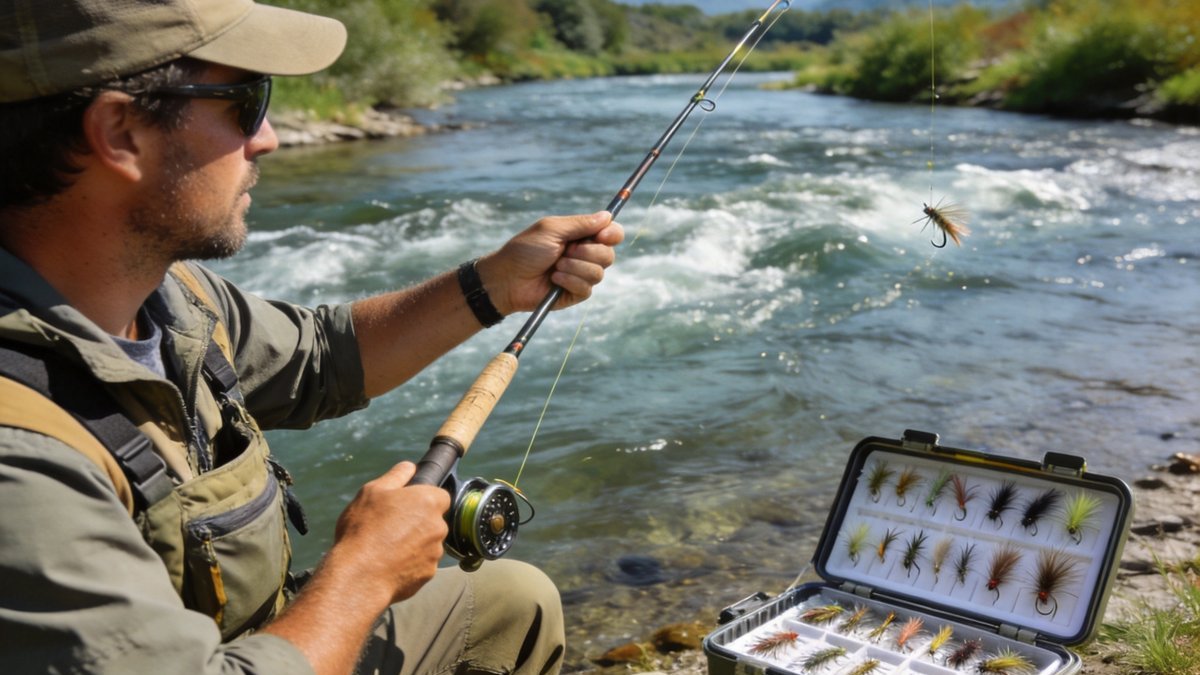
Fly fishing differs fundamentally from conventional fishing. Instead of using weight to cast a baited hook, fly fishing uses the weight of the line itself to deliver an almost weightless artificial fly. This creates a deeper connection to the water and the fish.
Key Takeaways
- Master the basic cast before going fishing. Practice in a park for 15 minutes daily for two weeks.
- Match the hatch: observe what insects are on the water and select a fly that imitates them.
- Learn to read water: fish hold in seams, behind rocks, in deep pools, and along undercut banks.
- Start with a 9-foot 5-weight rod, the most versatile setup for trout fishing.
Fly Casting Fundamentals
Fly casting uses the weight of the line, not the fly. The basic cast has two motions: backcast and forward cast. Start with 30 feet of line out. Lift the rod smoothly, accelerating to a stop at 1 o'clock behind you. Pause for the line to straighten. Forward cast to 10 o'clock. The line shoots forward and lays on the water. Common mistakes include using too much wrist and not pausing long enough on the backcast.
Fly Selection and Matching the Hatch
Flies fall into three categories: dry flies floating on the surface, nymphs fishing below imitating larvae, and streamers imitating baitfish. Match the hatch by observing insects near the water. Turn over rocks to see nymphs. Check what trout are feeding on. A basic fly box should include Adams and Elk Hair Caddis for dry flies, Pheasant Tail for nymphs, and Woolly Bugger for streamers in sizes 12 through 20.
Reading Water for Trout
Trout position themselves where they can access food with minimal energy. They hold in seams between fast and slow water, behind rocks creating eddies, in deep pools where food collects, along undercut banks, and in tailouts. In riffles, trout hold in slower water between currents. In pools, they position near the head where food enters. Approach systematically, fishing closest water first.
Essential Fly Fishing Gear
A complete outfit includes a 9-foot 5-weight rod, reel with smooth drag, weight-forward floating fly line, 7.5 to 9-foot leader tapered to 4X or 5X tippet, and flies. Accessories include nippers, hemostats, a net, and polarized sunglasses which are not optional for seeing fish and protecting eyes.
The first time a trout rises to your dry fly precisely because you presented it naturally, you will understand why anglers dedicate lifetimes to this craft.
The best fly anglers are not those who cast farthest. They are those who read water best, approach most carefully, and present the fly most naturally.
Understanding Rod Weights and Line Ratings
Fly rod weights range from 0-weight for tiny trout streams to 12-weight for heavy saltwater species. The rod weight indicates the line weight it casts best, not the physical weight of the rod. A 5-weight rod is the most versatile trout fishing rod, capable of handling dry flies, nymphs, and small streamers in moderate conditions. A 3-weight rod excels on small streams with delicate presentations. An 8-weight rod handles large streamers, bass flies, and light saltwater applications. Match your rod weight to your primary target species and typical fishing conditions rather than buying a single do-everything rod.
Fly line design matters as much as rod weight. Weight-forward floating lines work best for most freshwater situations, with the weight concentrated in the first 30 feet for easy casting. Double taper lines offer more delicate presentations for spring creeks and technical stillwater fishing. Sinking tip or full sinking lines get flies deep in lakes and fast rivers. Line taper affects casting performance: aggressive front tapers turn over large flies easily, while gentle presentation tapers land softly for spooky trout. Quality fly line represents the best performance upgrade for any fly rod, often outweighing the rod's price difference in casting performance.
Advanced Casting Techniques
Beyond the basic overhead cast, several advanced casts expand your fishing options. The roll cast uses the line tension on the water to load the rod, eliminating the need for a backcast. This technique is essential when fishing behind trees, along brushy banks, or in tight quarters where a backcast would snag. The reach cast allows you to mend line during the forward cast, creating a drag-free drift. The double haul uses both hands to increase line speed, adding 10 to 20 feet of casting distance with the same rod. This technique is essential for casting large streamers or fishing in wind.
The water haul cast loads the rod using the current's pull on the line, useful when mending line on the water before the next cast. The bow and arrow cast works in extremely tight quarters where even a roll cast is impossible, using the rod tip like a bow to launch the fly. Practice these casts on grass before attempting them on the water. Start with 20 feet of line and focus on timing and smooth acceleration. The most common error across all fly casts is rushing the forward stroke before the backcast has fully straightened. A deliberate pause is more important than speed.
Understanding Fly Hatches and Insect Life Cycles
Matching the hatch is the cornerstone of successful fly fishing. Aquatic insects spend most of their lives underwater as nymphs before emerging to the surface as winged adults. Mayflies have a distinctive upright wing shape and emerge throughout the day. Caddisflies have tent-shaped wings and create a frenzied emergence that drives trout into a feeding spree. Stoneflies are larger insects found in fast, oxygen-rich water. Midges are tiny but present year-round and often the only insect hatching on cold winter days, making them critical for winter fly fishing success.
Carry a basic insect collection kit including a small seine net to sample the water, a clear container for examining specimens, and a hand lens for identifying details. Match your fly pattern to the natural insect's size, shape, and color. Start with the size as the most important matching factor, since trout are more forgiving of color and pattern variations than size mismatches. When no hatch is visible, fish subsurface patterns like nymphs and streamers, which produce the majority of catches even during hatches. Terrestrial patterns imitating ants, grasshoppers, and beetles are effective from midsummer through early fall when these land insects fall into the water.
Choosing the Right Waders and Wading Boots
Quality waders keep you comfortable and dry while allowing freedom of movement for casting. Breathable waders made from Gore-Tex or similar membranes are the standard choice for most fly fishing, as they allow sweat vapor to escape while keeping water out. Neoprene waders provide excellent insulation for cold water fishing in winter months. Stocking-foot waders require separate wading boots but offer better fit, comfort, and durability than boot-foot designs. Fit waders with enough room for light insulating layers underneath without restricting movement or creating excess fabric that bunches when wading.
Wading boots provide essential traction on slippery river bottoms. Felt soles offer the best grip on algae-covered rocks but can transport invasive species between waterways. Rubber soles with metal studs provide excellent traction while being easier to clean and less likely to spread invasive organisms. Many states now restrict or prohibit felt soles to prevent the spread of didymo and other aquatic pests. Choose boots with good ankle support, reinforced toe protection, and quick-drying materials. Neoprene gravel guards integrated into the wader legs or worn as gaiters keep pebbles and sand from entering your boots during a day of wading.
Frequently Asked Questions
Is fly fishing harder than conventional fishing?
It has a steeper learning curve, but once mastered, it offers advantages in presenting lightweight lures naturally. Most become comfortable after two to three practice sessions.
What kind of water is best for learning?
Start on still water like a pond. Once comfortable, move to slow-moving streams. Save fast rivers for after developing mending skills.
Do I need expensive gear?
Entry-level combos from reputable brands cost $100 to $200. Invest more in quality fly line than the rod.
Can I fly fish for species other than trout?
Absolutely. Bass, panfish, pike, carp, salmon, and saltwater species like bonefish and redfish all take flies.