Table of Contents
Learn saltwater fishing techniques from surf casting to deep sea trolling. Essential gear, bait, and methods for fishing in oceans, bays, and coastal waters.
Jordan Myers
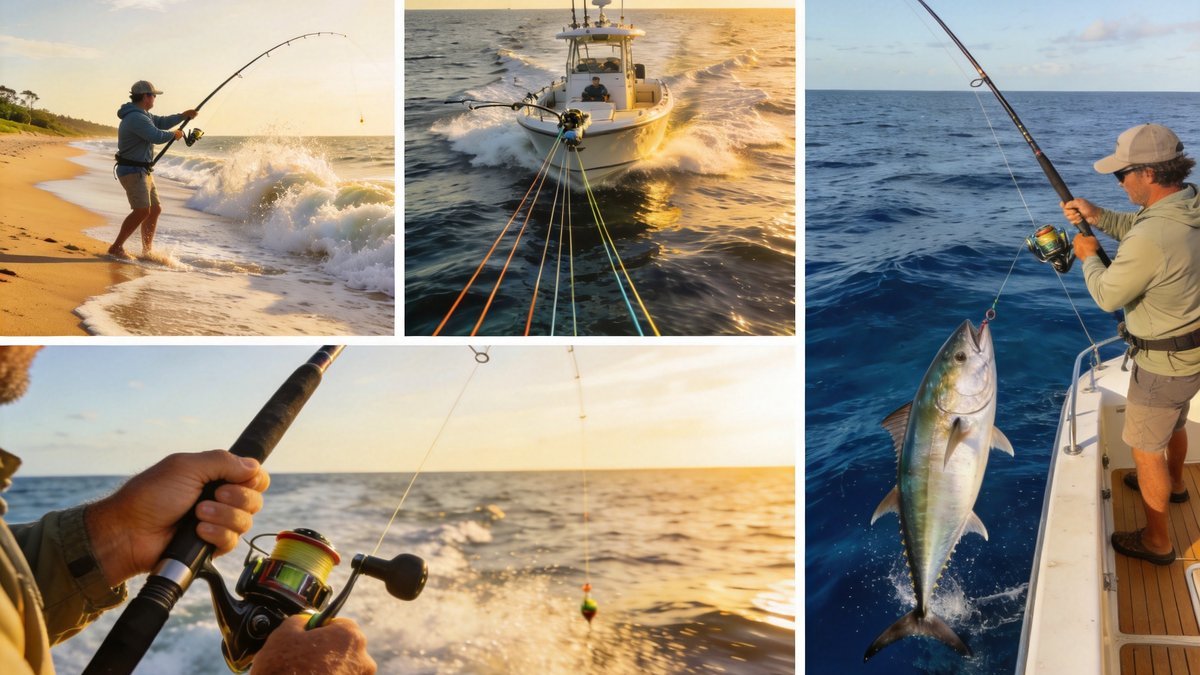
Learn saltwater fishing techniques from surf casting to deep sea trolling. Essential gear, bait, and methods for fishing in oceans, bays, and coastal waters.
Saltwater fishing opens a world of possibilities that freshwater anglers can only dream about. The ocean holds larger, stronger, and more diverse fish species, and the techniques required to catch them differ significantly from freshwater methods. From standing ankle-deep in the surf to venturing miles offshore, saltwater fishing offers challenges and rewards at every level.
Surf casting is the most accessible saltwater fishing method, requiring only a beach, a rod, and the right technique. A dedicated surf casting rod measuring 10 to 12 feet allows you to cast baited rigs past the breaking waves where fish feed. Match this rod with a large spinning reel spooled with 15 to 30-pound monofilament or braided line. Braided line offers better casting distance and sensitivity in the surf. Use a fish-finder rig with a sliding egg sinker to keep your bait on the bottom while allowing fish to pick it up without feeling the weight. Popular baits for surf fishing include sand crabs, shrimp, squid, cut bait, and bloodworms. Target species vary by region but include striped bass, redfish, pompano, whiting, and flounder. Read the beach structure to identify cuts, sandbars, and troughs where fish concentrate. The best fishing often occurs during incoming tides when fish move into the shallows to feed.
Bays and estuaries provide protected saltwater fishing opportunities with diverse species and easier conditions than the open ocean. These nutrient-rich environments serve as nurseries for many saltwater species and attract feeding fish throughout the year. Fish from piers, jetties, bridges, and small boats using medium-action spinning gear. Live bait like shrimp, fiddler crabs, and small mullet work well in these environments. Artificial lures including soft plastics, spoons, and topwater plugs also produce consistent results. Target species include speckled trout, red drum, flounder, snook, tarpon, and a variety of panfish depending on your location. Tidal movement determines fishing success in bays and estuaries. Fish actively feed during moving tides, especially the two hours before and after high tide. Use a tide chart to plan your fishing sessions around optimal tidal stages.
Trolling allows anglers to cover large areas of water efficiently and locate actively feeding fish. The technique involves dragging lures or baited rigs behind a moving boat at controlled speeds. Speed control is critical for successful trolling. Different species prefer different trolling speeds, with most game fish striking lures moving between 3 and 8 miles per hour. Use planer boards to spread lines away from the boat, covering a wider path and presenting lures to fish that might be spooked by the boat. Downriggers allow precise depth control by using a heavy weight to take your lure to a specific depth while the boat moves. This technique proves especially effective for salmon, lake trout, and walleye in both salt and fresh water. Trolling depth depends on lure type, line diameter, and boat speed. Use a depth calculator or consult local experts to dial in your presentation for target species.
Offshore fishing takes anglers into waters deeper than 100 feet, targeting pelagic species like tuna, marlin, mahi-mahi, and wahoo. This style of fishing requires specialized boats with navigation electronics, outriggers, fighting chairs, and safety equipment. Most beginners start with a chartered trip to experience offshore fishing before investing in equipment. Charters provide all necessary gear, bait, and expertise while handling the boat operations. Deep dropping targets bottom fish like grouper, snapper, and tilefish in waters from 200 to 1,000 feet deep. This technique uses heavy weights to take baited rigs to the bottom quickly. Electric reels have become popular for deep dropping, reducing physical strain when hauling rigs from extreme depths. Safety considerations multiply offshore. Weather conditions change rapidly, and help is hours away. Carry redundant communication equipment, file a float plan, and never venture offshore without proper safety training and equipment.
Saltwater fishing teaches a lesson that applies to all angling: the ocean gives and the ocean takes. One day you land a personal best. The next day you get skunked. The humility that comes from accepting both outcomes is what separates experienced saltwater anglers from frustrated beginners.
Rinse everything after every saltwater trip. Not tomorrow. Not when you get home. Every rod, reel, lure, and piece of terminal tackle that touches saltwater needs immediate fresh water rinsing to prevent corrosion. This single habit extends your gear life by years.
Most coastal states require a separate saltwater fishing license or an endorsement on your freshwater license. Some states have reciprocal agreements or regional licenses covering multiple states. Check regulations for your specific location before fishing, as penalties for unlicensed fishing can be substantial.
Spring and fall typically offer the best surf fishing as fish migrate along the coast. Summer provides consistent action for resident species but can be slow during midday heat. Winter surf fishing targets cold-water species and can be productive in southern regions. Research local migration patterns for your target species.
Use a landing net or gaff for large fish. Avoid touching fish with dry hands, which removes their protective slime. For catch and release, minimize air exposure and handle fish as little as possible. Use circle hooks when bait fishing, as they consistently hook fish in the corner of the mouth, reducing injury and improving survival rates.
Essential safety equipment includes life jackets for everyone onboard, a VHF radio, flares, a first aid kit, a fire extinguisher, an EPIRB or personal locator beacon, and a fully stocked ditch bag. File a float plan with someone onshore detailing your departure time, location, and expected return. Check weather forecasts before every trip.
Learning to read the water is one of the most valuable skills an angler can develop. Fish hold in areas where they can access food with minimal energy expenditure. Look for eddies behind rocks, current seams where fast and slow water meet, and deep pools where fish rest during bright daylight hours. In rivers, the most productive spots are often where smaller tributaries join the main channel, bringing fresh food and oxygenated water.
Successful anglers pay close attention to what fish are naturally eating. Before choosing your bait or lure, spend a few minutes observing the water. Look for insects flying near the surface, check under rocks for nymphs, and note what local baitfish look like. Matching your presentation to the natural food source dramatically increases your catch rate. In saltwater, pay attention to bird activity, which often indicates baitfish schools below.
Practicing ethical angling ensures fish populations remain healthy for future generations. Use barbless hooks or pinch down barbs for easier release with less damage to the fish. Wet your hands before handling fish to protect their slime coat. Minimize air exposure by keeping fish in the water while removing hooks. If you plan to release your catch, avoid using treble hooks and stop fishing when fish show signs of stress in warm water conditions.
Learning to read the water is one of the most valuable skills an angler can develop. Fish hold in areas where they can access food with minimal energy expenditure. Look for eddies behind rocks, current seams where fast and slow water meet, and deep pools where fish rest during bright daylight hours. In rivers, the most productive spots are often where smaller tributaries join the main channel, bringing fresh food and oxygenated water.
Successful anglers pay close attention to what fish are naturally eating. Before choosing your bait or lure, spend a few minutes observing the water. Look for insects flying near the surface, check under rocks for nymphs, and note what local baitfish look like. Matching your presentation to the natural food source dramatically increases your catch rate. In saltwater, pay attention to bird activity, which often indicates baitfish schools below.
Practicing ethical angling ensures fish populations remain healthy for future generations. Use barbless hooks or pinch down barbs for easier release with less damage to the fish. Wet your hands before handling fish to protect their slime coat. Minimize air exposure by keeping fish in the water while removing hooks. If you plan to release your catch, avoid using treble hooks and stop fishing when fish show signs of stress in warm water conditions.
Learning to read the water is one of the most valuable skills an angler can develop. Fish hold in areas where they can access food with minimal energy expenditure. Look for eddies behind rocks, current seams where fast and slow water meet, and deep pools where fish rest during bright daylight hours. In rivers, the most productive spots are often where smaller tributaries join the main channel, bringing fresh food and oxygenated water.
Successful anglers pay close attention to what fish are naturally eating. Before choosing your bait or lure, spend a few minutes observing the water. Look for insects flying near the surface, check under rocks for nymphs, and note what local baitfish look like. Matching your presentation to the natural food source dramatically increases your catch rate. In saltwater, pay attention to bird activity, which often indicates baitfish schools below.